Groom Attire
Beach Wedding Groom Attire: Linen Suits and Lightweight Tailoring
How to dress him for sand and heat — tan and light-grey linen, a soft-shouldered jacket, an open collar, and the optional no-jacket look that still reads polished.
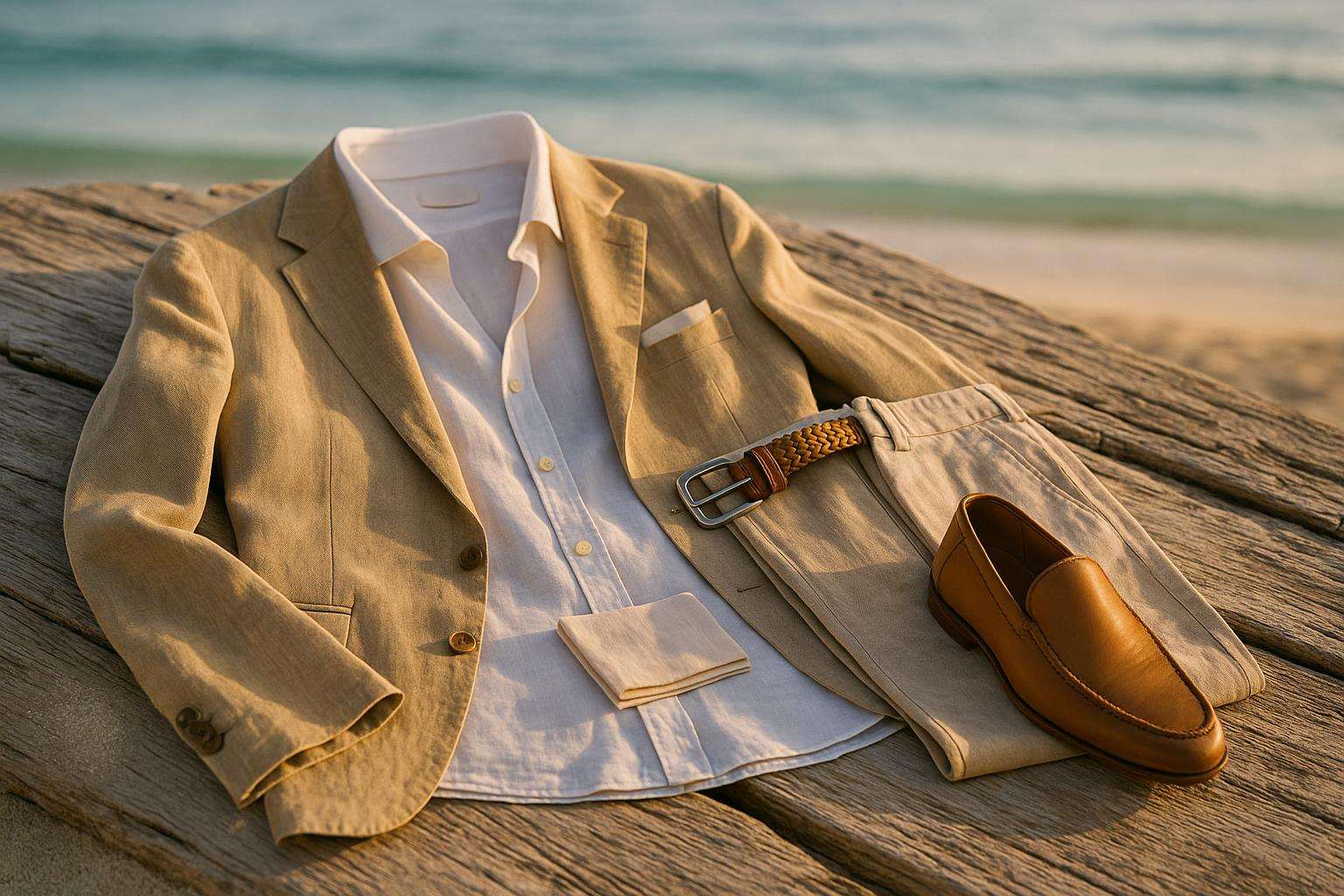
For a beach wedding, dress him in a tan, sand, or light-grey linen (or linen-cotton) suit, cut with a soft, lightly structured shoulder so it drapes in the heat. Worn open-collar, with tan loafers and a slim belt, it looks effortless rather than melted. If the day is informal, the jacket is optional. Choose a blend over pure linen for a long day — it breathes nearly as well and holds its shape through the reception.
You want him to look as good in the golden-hour photographs as he does at the altar, and on a beach that comes down to two decisions made early: the fabric and the fit. Everything else — the color, the shoes, whether he wears a tie — follows from getting those two right. The good news is that the most comfortable choice is also the most photogenic one, so you are not trading his ease for the pictures.
Why is linen the right fabric for a beach groom?
Linen is woven from flax, a natural fibre prized for its breathability and dry, cool hand — exactly what a humid, sun-exposed ceremony asks for. A wool suit traps heat against the body; linen lets the sea breeze move through it. The trade-off is the crease. Pure linen wrinkles within minutes of sitting down, and over a long day it can drift from relaxed to rumpled.
That is why, for a full wedding, a linen-cotton or linen-wool blend is usually the wiser call. It keeps most of linen's cooling and its honest texture while resisting deep creasing and holding a cleaner line. The popular SuitSupply Havana suit, for instance, is a 60% linen, 40% cotton sand-toned cloth woven by the Italian mill Di Sondrio. Save pure linen for a short, casual daytime ceremony; reach for the blend when the day runs into the evening.
| Quality | Pure linen | Linen blend (linen-cotton / linen-wool) |
|---|---|---|
| Breathability | Best — coolest, driest hand | Excellent — nearly as cool |
| Wrinkle resistance | Poor — creases in minutes | Good — holds a cleaner drape |
| Shape over a long day | Can stretch and sag | Keeps its silhouette |
| Best for | Short, casual daytime ceremony | Beach semi-formal & formal, long days |
What color should the suit be?
Light neutrals photograph cleanly in direct coastal sun, so the core palette is sand, tan, stone, ivory, and light grey. Light grey is the most versatile of the group — it dresses up with a tie or relaxes with an open collar, and it flatters most complexions in bright light. If you want a little color, the pastels trending this season — powder blue and pale sage — read beautifully against ocean and sky. A light-blue linen suit is also a graceful way for the groom to stand a step apart from groomsmen in beige.
Steer him away from black and heavy navy: they absorb heat and feel sombre in beach light. Leave pure white to the couple, and skip synthetics and neon shades that flare harshly under the sun. The whole point of the palette is to sit with the setting — the sand, the water, the sky — not against it.
How should the jacket be built and fitted?
A soft, lightly structured or unstructured jacket is what makes linen look intentional rather than stiff. Half-canvas construction — the method SuitSupply uses on the Havana — strengthens the fine cloth and lets it mould to him over time, so the natural drape works with his body. Fit, though, is the whole game. Linen is meant to crease a little; that is its charm. But a poorly fitted linen suit looks sloppy, not relaxed, which is why the shoulders, chest, and trouser break have to be right so the wrinkles read as ease rather than accident.
This is the strongest argument for made-to-measure. Hockerty makes the case plainly: off-the-rack linen bags and loses its shape by the reception, while a suit cut to him holds its relaxed elegance because it was made for his frame, not a mannequin's. A linen waistcoat is a smart optional layer too — it lets him shed the jacket in the afternoon heat and still look entirely put together for photos.
Can he skip the jacket and the tie?
Often, yes. Many beach weddings sit at a formality relaxed enough that he can go without the jacket altogether: tailored linen trousers, a well-fitted shirt — a Cuban or camp collar reads intentionally coastal — and a clean slim belt. The tie is similarly optional, and an open collar both photographs well in natural light and keeps him cooler. If he wants a touch more polish, a knitted linen tie or a lightweight silk in a subtle pattern suits the setting without feeling formal.
For footwear, tan or cognac loafers are the most versatile; white bucks are a classic warm-weather formal shoe, and suede in tan or sand adds texture without weight. Match the belt to the shoe. Keep accessories minimal — a simple pocket square, classic sunglasses, nothing heavy or dark. And when it comes to the groomsmen, coordinate rather than clone: keep the fabric consistent across the party and set the groom apart by shade or lapel, so he reads as the groom in every frame.
Frequently asked
What should a groom wear to a beach wedding?
A tan, sand, or light-grey linen — or linen-cotton blend — suit, cut with a soft (lightly structured) shoulder and worn with an open collar, is the strongest, most comfortable choice. It breathes in coastal heat, photographs cleanly in bright sun, and reads relaxed without looking careless. If the ceremony is on the informal side, he can skip the jacket entirely and wear tailored linen trousers with a well-fitted Cuban-collar shirt. Keep accessories minimal — a slim belt, tan loafers, and a simple pocket square — and let the fabric and the fit do the work. Avoid black, heavy navy, and pure white.
Is pure linen or a linen blend better for a wedding?
For a full wedding day, a linen-cotton or linen-wool blend is usually the smarter pick. Pure linen breathes best and has the truest dry, natural texture, but it creases deeply within minutes of sitting and can stretch out of shape over a long celebration. A blend keeps most of linen's cooling while holding a cleaner drape and resisting the worst of the wrinkling, per guidance from Black Lapel. If the wedding is a short, casual daytime ceremony, pure linen is lovely; if it runs into the evening, the blend will look better in the reception photos.
Does the groom have to wear a tie at a beach wedding?
No. Most beach weddings sit at a relaxed enough formality that the tie is optional, and an open collar both photographs well in natural light and keeps him cooler. If he wants a little more polish, a knitted linen tie or a lightweight silk tie in a subtle pattern suits the setting without feeling stiff. The cleanest rule of thumb: match the neckwear decision to the venue and the time of day. A barefoot sand ceremony at noon calls for an open collar; a dressier terrace reception at golden hour can carry a tie comfortably.
What shoes should the groom wear with a linen beach suit?
Tan or cognac leather loafers are the most versatile choice and pair naturally with light linen. White bucks are a classic warm-weather formal shoe; suede in tan or sand adds texture without visual weight; and for a fully relaxed sand ceremony, woven loafers or clean espadrilles work. Whatever he chooses, match the belt color to the shoe as closely as possible. Steer away from heavy black dress shoes — they fight the airy palette and read too formal against a beach backdrop. Comfort matters too: he will be standing, walking on uneven ground, and dancing.
What color linen suit is best for a beach wedding?
Light neutrals photograph most cleanly in direct coastal sun: sand, tan, stone, ivory, and light grey are the core palette, with light grey being the most versatile across dress codes. Soft pastels — powder blue and pale sage — are trending and read beautifully against ocean and sky. A light-blue linen suit is a popular way for the groom to stand apart while his groomsmen wear beige. Avoid black and heavy navy, which absorb heat and feel sombre in beach light, and leave pure white to the couple. Skip synthetics and neon shades that flare under bright sun.
Should the groom and groomsmen wear matching suits?
Not identical — coordinated. The most common mistake is dressing the groomsmen as exact copies of the groom. The more elegant approach keeps the fabric consistent across the party (so everyone shares the same beach-appropriate texture) and differentiates the groom by shade or lapel. For example, the groom in ivory or light blue with groomsmen in light grey or pale sage. That contrast reads clearly in photographs against an ocean backdrop and quietly signals who the groom is, without anyone needing a boutonnière to tell them apart.