 The Groom's Role
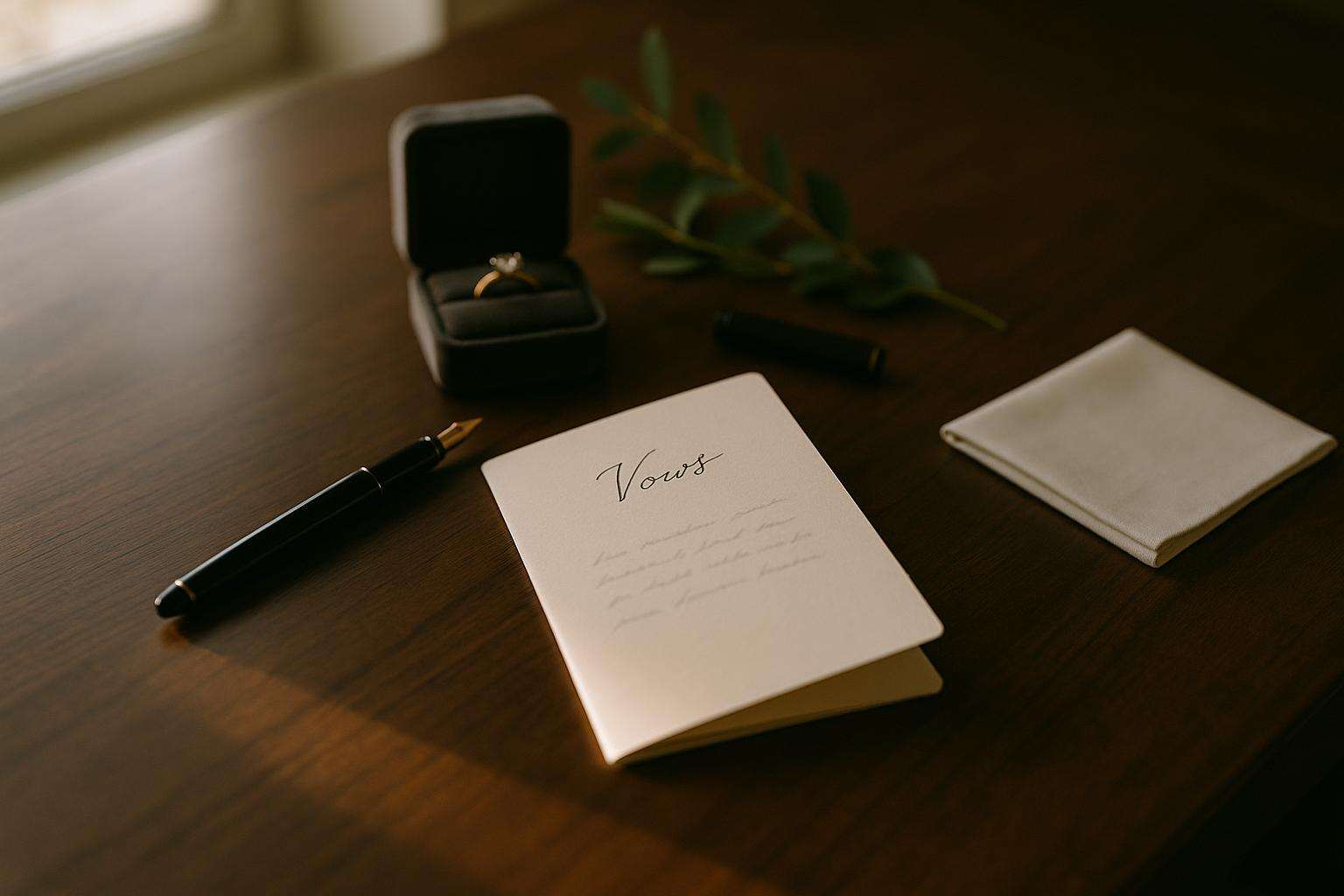
 A curated set of full, ready-to-borrow groom vow examples across registers — classic religious, modern secular, short, heartfelt, and lightly humorous — each with the exact wording and a note on how he can make it his own.
By Nathaniel Cross · 11 MIN READ
 The Groom's Role
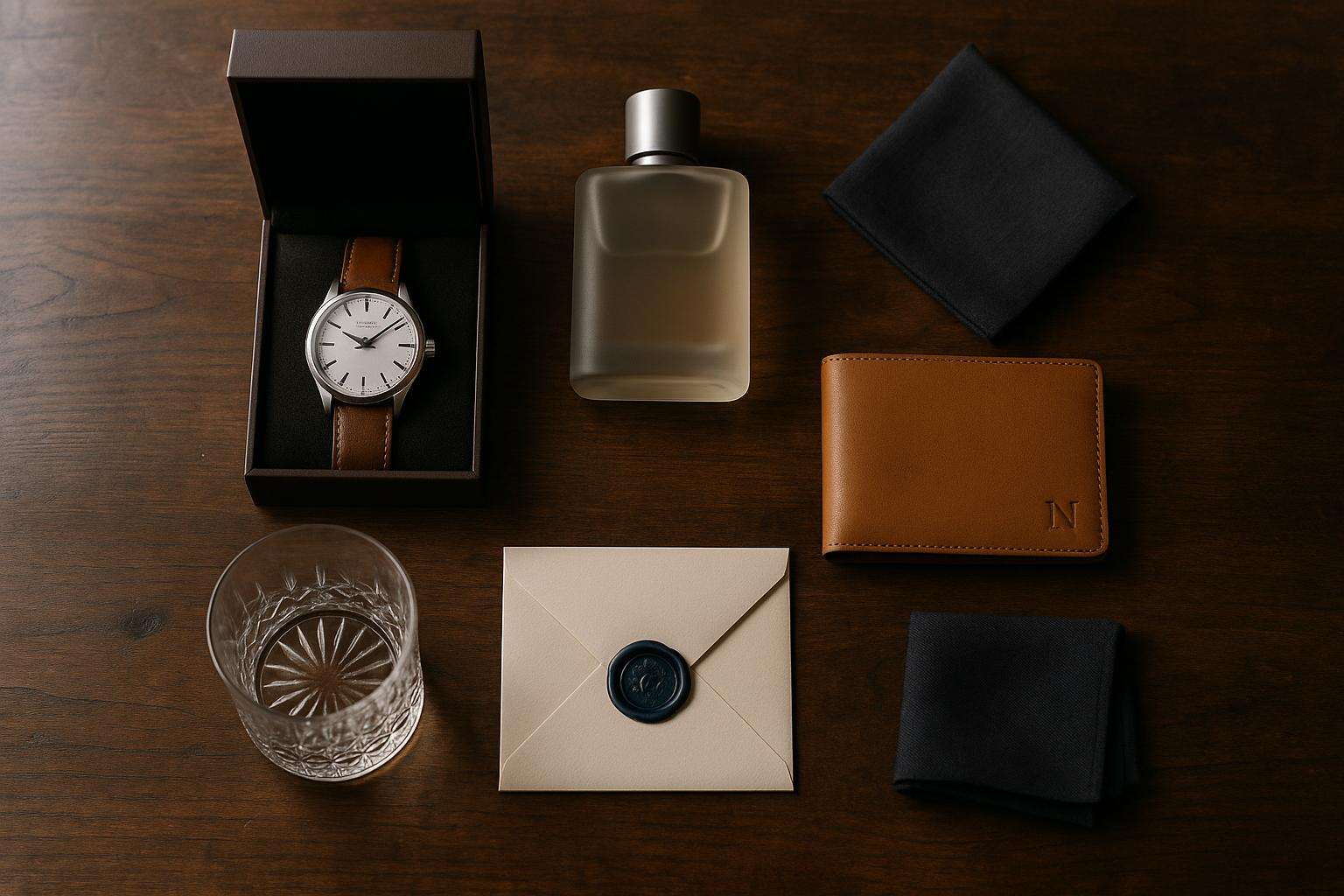
 A curated, ranked edit of meaningful wedding-day gifts to give your groom — engravable watches, signature fragrance, monogrammed leather, and the keepsake he will reach for long after the day.
By Nathaniel Cross · 11 MIN READ
 The Groom's Role
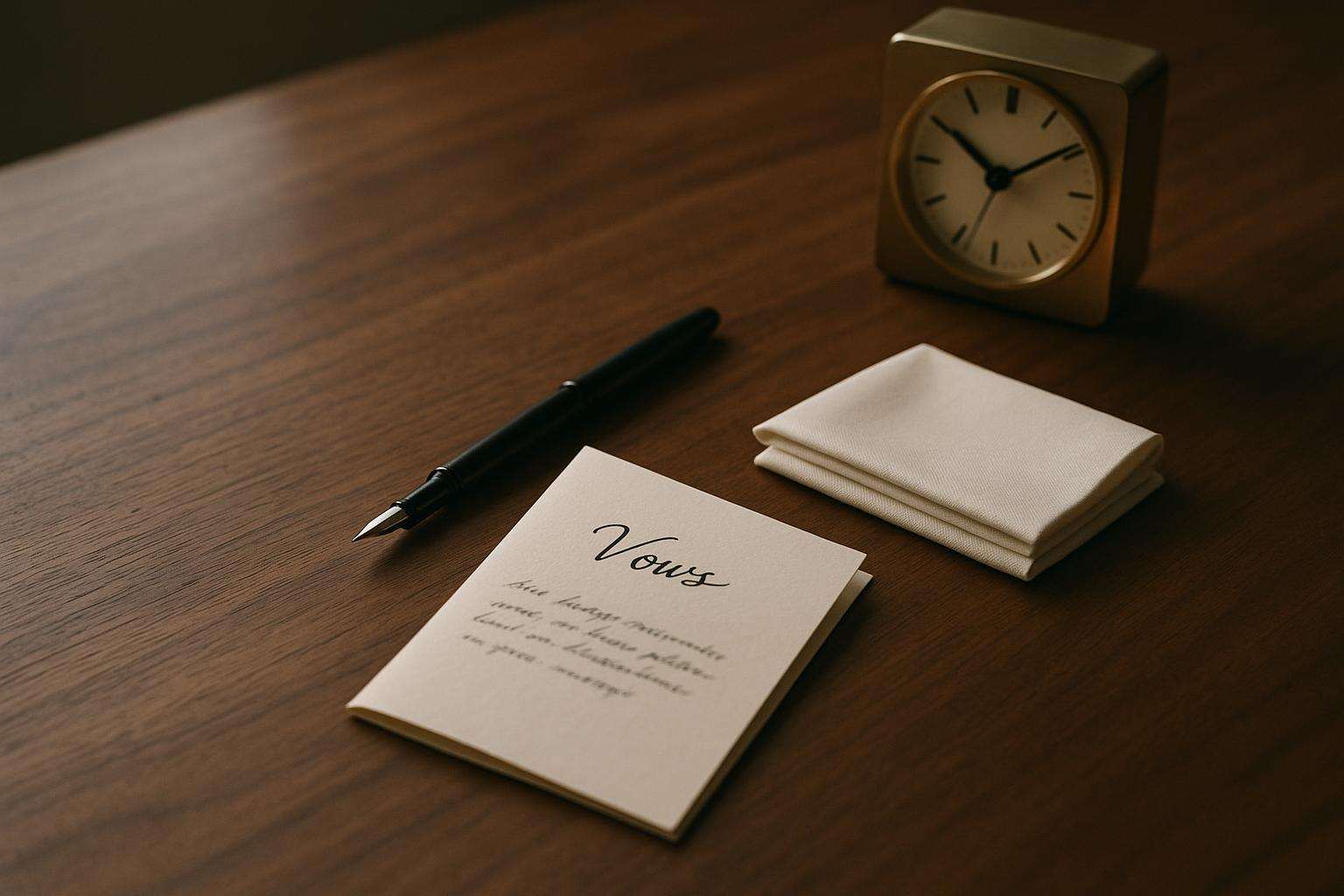
 A calm, step-by-step framework for the groom writing his own vows — a five-part structure, the right length, and how to sound heartfelt rather than corny.
By Nathaniel Cross · 8 MIN READ
 The Groom's Role
 Exactly what he owns from engagement to the aisle — his suit, his ring, his men, and his grooming — mapped to the real booking windows, so you can see his lane and hand it to him.
By Nathaniel Cross · 9 MIN READ
 The Groom's Role
 His half of the thank-you notes — how to divide the list together, the real three-month deadline, gift-acknowledgment wording, and ready templates for groomsmen, parents, and every gift-giver.
By Nathaniel Cross · 9 MIN READ
 The Groom's Role
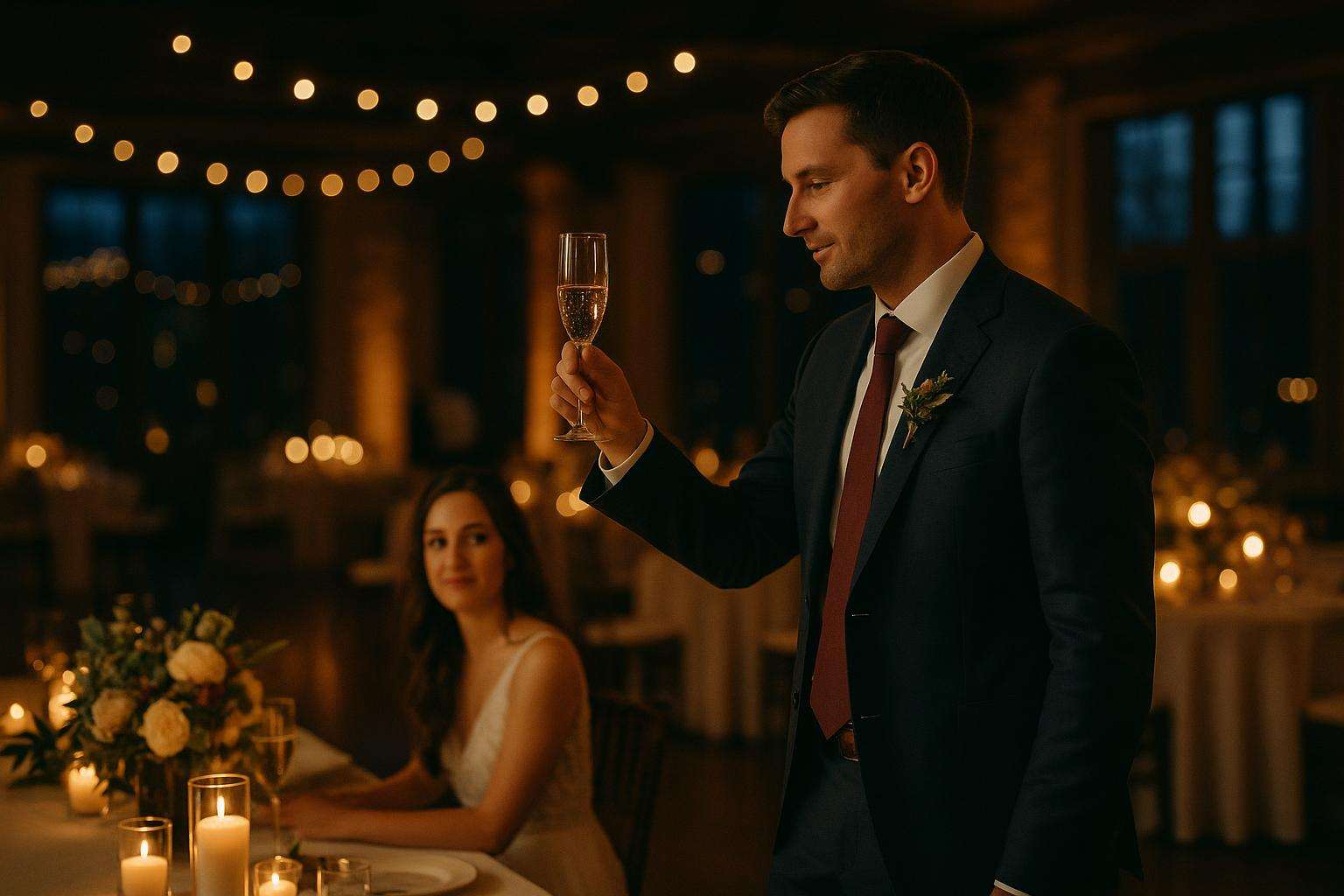
 A clear blueprint for his toast — who to thank in order, the four-part arc, the ideal length, and how to land one clean, tasteful joke.
By Nathaniel Cross · 8 MIN READ
 The Groom's Role
 The classic etiquette list — marriage license, officiant fee, the rings, the honeymoon, his attire — mapped against how couples actually divide it now. The things you can confidently hand him.
By Nathaniel Cross · 9 MIN READ
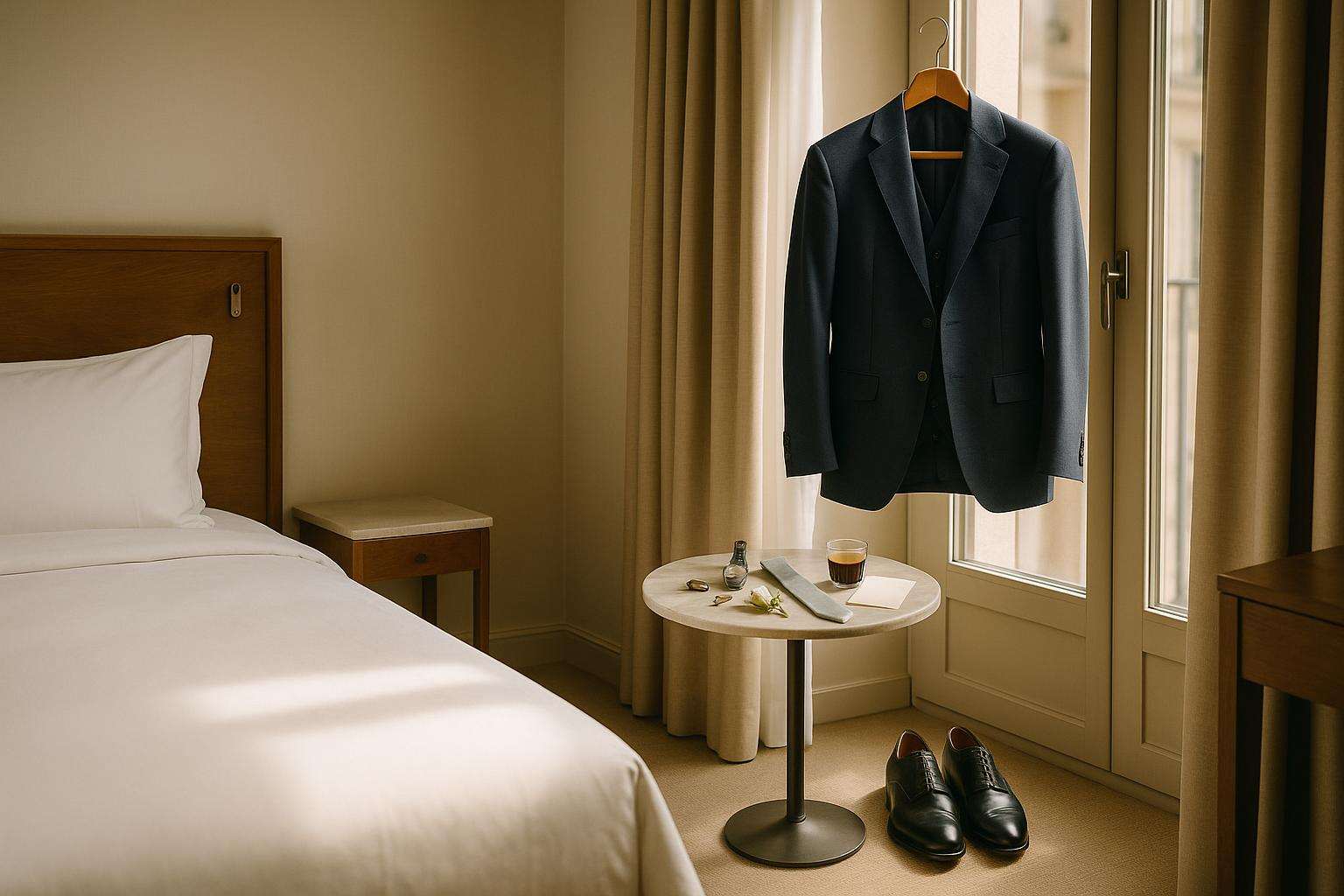 The Groom's Role
 An hour-by-hour plan for his getting-ready morning with the groomsmen — timing, food and drink, grooming touch-ups, the dressing order, and styling the room so the photographs look effortless.
By Theo Rourke · 9 MIN READ
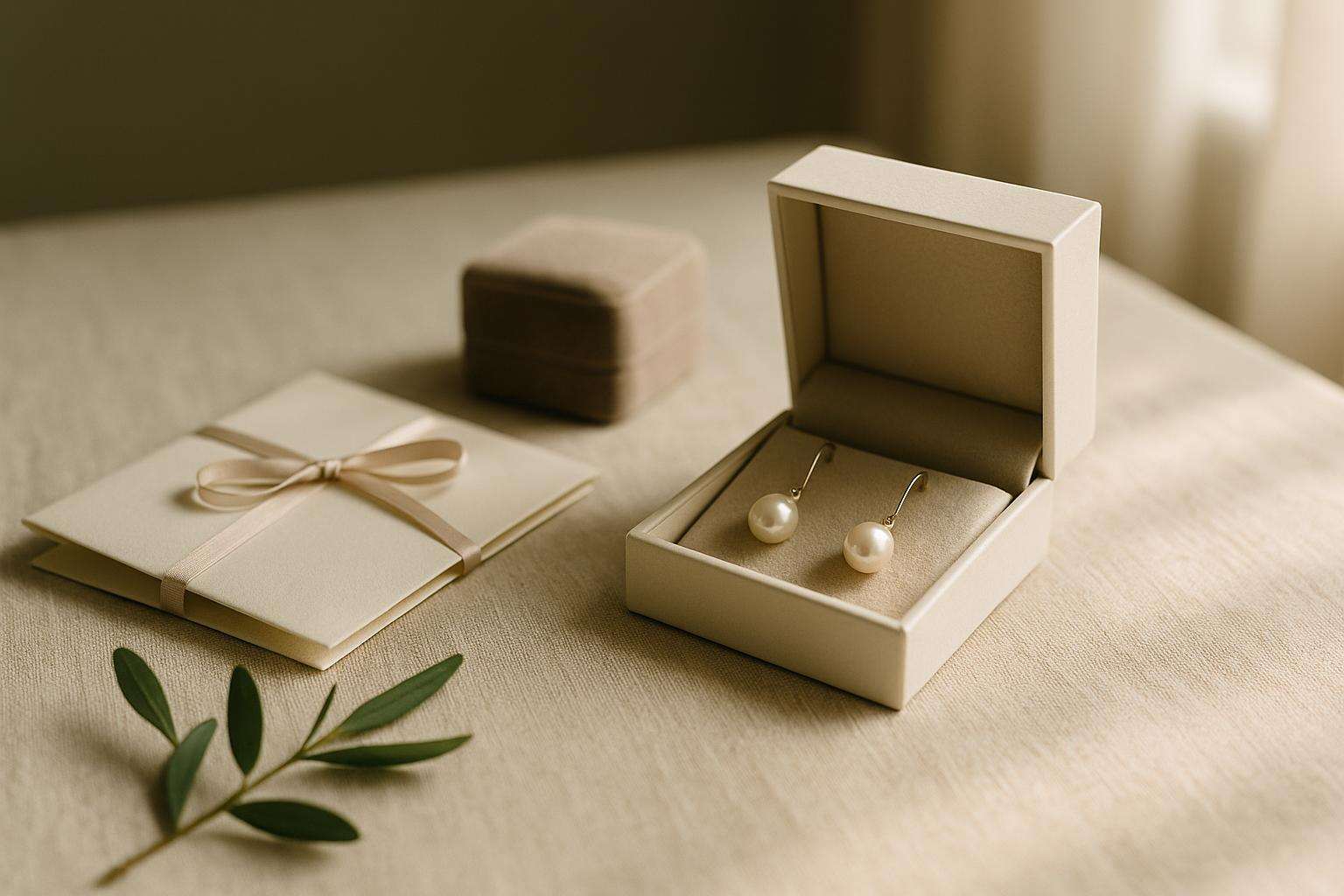 The Groom's Role
 His gift to her is optional, private, and entirely about the thought — here is how the groom chooses it, when he gives it, and how to coordinate with her gift without spoiling the surprise.
By Nathaniel Cross · 8 MIN READ
 The Groom's Role
 From his side of the moment: what a first look really is, how he can prepare emotionally and logistically, where it fits in the day-of timeline, and how to make it photograph beautifully.
By Nathaniel Cross · 8 MIN READ
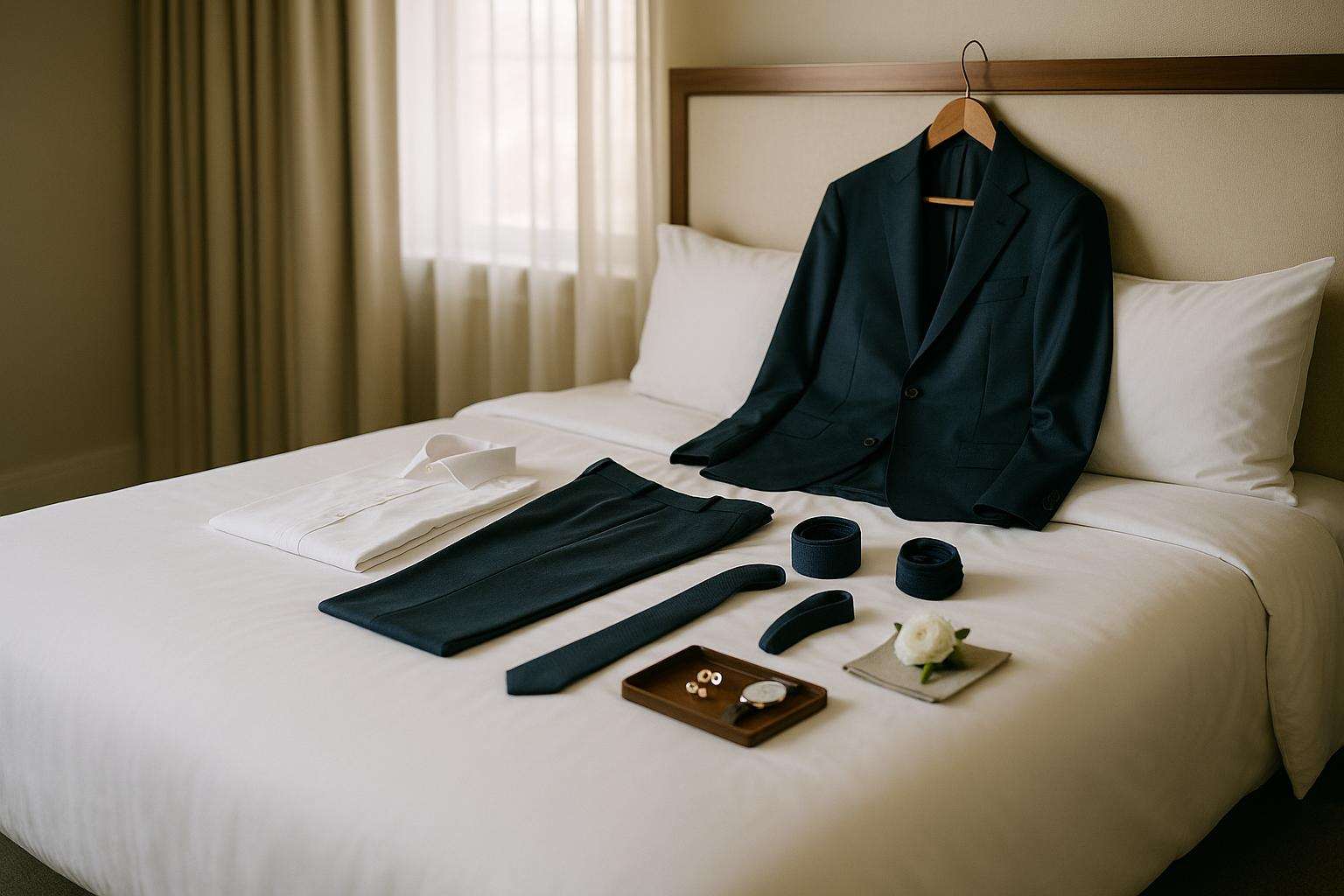 The Groom's Role
 His getting-ready runway is short, but the moves carry the whole day. Here is the order to dress him, when to pin the boutonniere, and how to keep him crisp from first look to send-off.
By Julian Prescott · 9 MIN READ
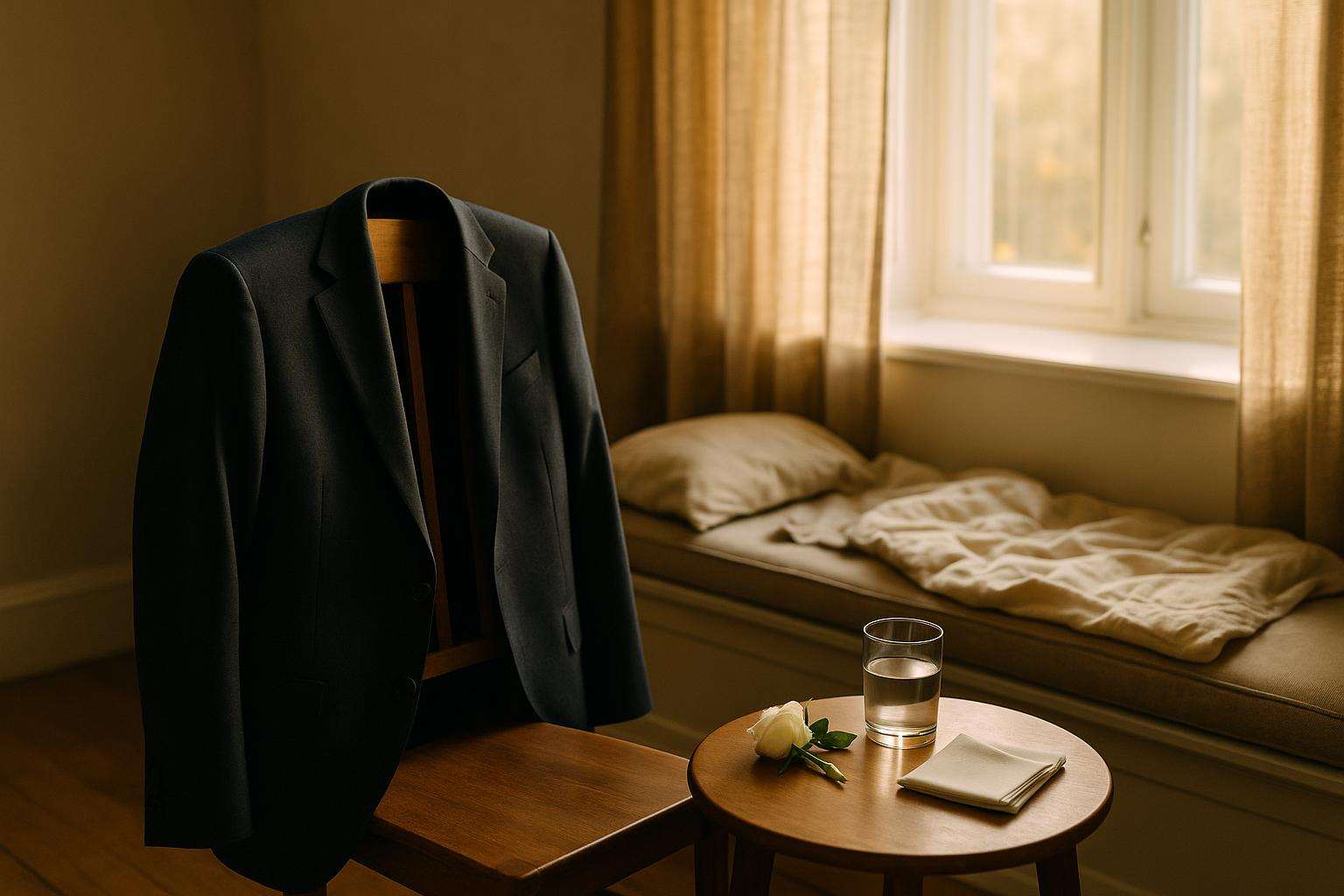 The Groom's Role
 How to tell ordinary pre-wedding jitters from genuine cold feet, what is normal for him to feel, and how to read and support an anxious groom — calmly, never alarmist.
By Nathaniel Cross · 8 MIN READ
 The Groom's Role
 Whether the groom's father speaks at all, where he falls in the order, how long to keep it, and the simple welcome-story-toast arc that makes a short speech land.
By Nathaniel Cross · 8 MIN READ
 The Groom's Role
 A calm, complete guide to what the father of the groom actually does — across planning, the rehearsal dinner, the ceremony, and the reception — and how to tell him exactly what you need.
By Nathaniel Cross · 9 MIN READ
 The Groom's Role
 What his father should wear, decoded — read the dress code, coordinate with the party rather than clash, and decide whether to rent or buy.
By Julian Prescott · 8 MIN READ
Frequently asked about The Groom's Role
What is the groom responsible for in the wedding?
Traditionally the groom handles the marriage license, the officiant's fee, his own attire and the wedding party's coordination, the bride's ring, and historically the honeymoon. Modern couples split far more of it together. The useful version is a clear list of what is genuinely his to own — his attire, his vows and speech, his party, his thank-yous — so nothing falls through the cracks.
How long should the groom's speech be?
Three to five minutes is the sweet spot. He should welcome and thank the guests and both families, thank his groomsmen, speak warmly to his partner, and end on a toast. Keep any humor kind and brief — a single well-judged line lands better than a string of jokes. Written out and lightly rehearsed, it will feel natural rather than read.
Are the groom's cold feet a sign something is wrong?
Usually not. Pre-wedding nerves — about the speech, the attention, the size of the commitment — are ordinary and pass. Genuine cold feet is persistent, specific doubt about the relationship itself rather than the event. The difference is the object of the worry: the day, which calms with reassurance, versus the marriage, which deserves an honest, unhurried conversation.