Groom Attire
Black-Tie Wedding Attire for the Groom: The Complete Tuxedo Rulebook
When the invitation says black tie, the groom wears a true tuxedo — satin-faced peak or shawl lapel, white formal shirt, black bow tie, and never a notch. Here is the complete rulebook.
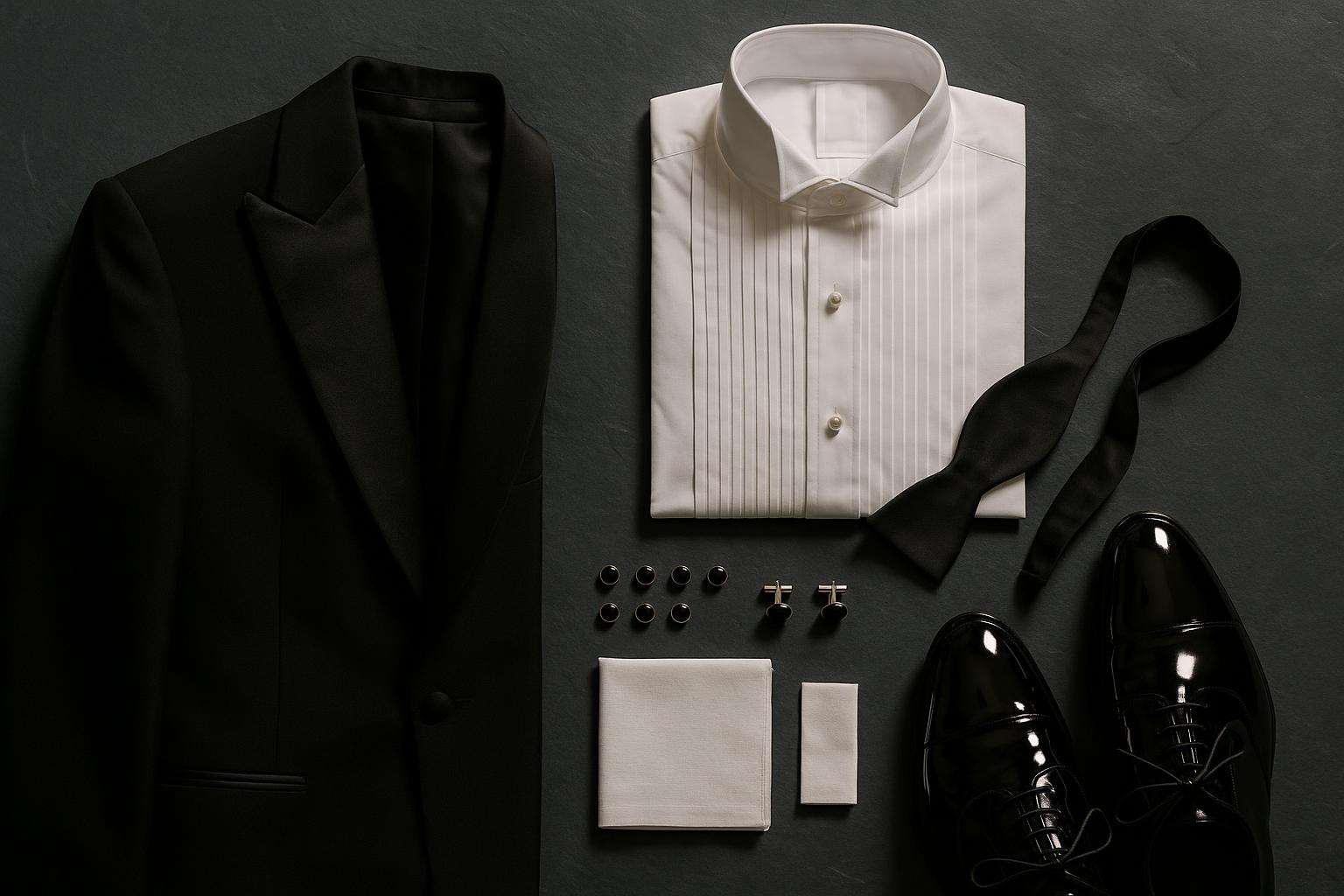
When the invitation says black tie, the groom wears a true tuxedo: a black or midnight-blue dinner jacket with a satin- or grosgrain-faced peak or shawl lapel (never a notch), a crisp white tuxedo shirt, a black self-tie bow tie, satin-striped trousers with no belt, and polished black shoes. He sets himself apart from the party with midnight blue or a different lapel shape — not by breaking the rules.
Of all the dress codes a wedding invitation can carry, black tie is the strictest — and, happily for the woman steering the planning, the most clearly defined. There is far less room for a groom to go wrong here than at a “cocktail” or “formal” wedding, because black tie comes with a settled rulebook that the great formalwear houses all agree on. Learn the handful of firm rules below and he will look unmistakably right in every photograph for the next forty years.
What does black tie actually require of the groom?
Black tie is an evening dress code, traditionally reserved for events that begin after six o'clock, and it is built entirely around the tuxedo — what the British call the dinner suit. As SuitSupply explains in its dress-code guide, the code is deliberately strict: color and pattern should be minimal to nonexistent. The canonical kit, per The Black Tux's black-tie wedding guide, is simple to recite — a black tuxedo, a truly white tuxedo shirt, a black bow tie, and polished black shoes.
The one detail that separates a tuxedo from an ordinary dark suit is its satin or grosgrain facing. You'll see that subtle sheen on the lapels, on the covered buttons, around the pockets, and as a single stripe running down the outside seam of the trousers. Hugo Boss describes its dinner jackets exactly this way — a single covered button, a satin peak lapel, and trousers with a satin band, cut in fine virgin wool. If the garment he's eyeing has none of that facing, it isn't a tuxedo, and it isn't black tie.
Peak or shawl lapel — and why never a notch?
There are three lapel shapes in menswear, but only two of them belong on a black-tie tuxedo. Understanding the difference is the single most useful thing you can know when he's standing in the fitting room.
- Peak lapel — the enduring black-tie (and white-tie) standard. Its edges point upward toward the shoulders, broadening his frame and reading as the most formal, authoritative choice. It traditionally carries a working buttonhole on the left for a boutonnière.
- Shawl lapel — a single, smooth, rounded curve that frames the bow tie. It's the “old Hollywood,” smoking-jacket look: softer, a touch more romantic, and fully black-tie appropriate. Note it usually has no buttonhole, so a boutonnière must be pinned on.
- Notch lapel — the everyday business-suit shape, with a small triangular “notch” cut where the collar meets the lapel. This does not belong at black tie. The Black Tux files notch tuxedos under its more relaxed guest looks, and tailoring authorities warn the notch “risks appearing too casual” for a strict formal code.
One more refinement worth knowing: the facing can be glossy satin or matte, ribbed grosgrain. Satin is the more common and photographs with a bright shine under evening light; grosgrain is the quieter, more understated finish many tailors consider the more refined of the two. Either is correct. A notch lapel in plain cloth is not.
| Element | The rule |
|---|---|
| Jacket | Black or midnight-blue dinner jacket (white only for warm-weather evenings) |
| Lapel | Peak or shawl, satin- or grosgrain-faced — never notch |
| Shirt | Crisp white tuxedo shirt; pleated or piqué bib; wing or spread collar |
| Tie | Black self-tie bow tie (no neckties) |
| Trousers | Matching, single satin stripe down the outseam, no belt |
| Waist | Black cummerbund or low-cut waistcoat — never both |
| Shoes | Polished black patent or high-shined calf oxfords |
| Jewelry | Onyx or silver studs and cufflinks; optional white pocket square |
What does he wear with the jacket?
The jacket is only half the look. The shirt must be unambiguously white — a tuxedo shirt with a pleated or piqué (marcella) bib and either a wing or a spread collar. Off-white, patterned, or ordinary business shirts break the code. The trousers match the jacket exactly and carry that single satin or grosgrain stripe down the outseam; he wears no belt, because the waistband is meant to be covered by either a black cummerbund or a low-cut waistcoat — one or the other, never both at once.
For the neck, there is really only one answer: a black bow tie, and ideally a self-tied silk one rather than a pre-tied clip. The bow tie is original to the tuxedo and frames the satin lapel precisely as the look was designed to be worn. Shoes are polished black — patent leather or a highly shined calf oxford. Finish with restraint: shirt studs and matching cufflinks in onyx or simple silver, and an optional white pocket square. At black tie, the elegance is in the discipline, not the flourishes.
How does the groom stand apart without breaking the code?
This is usually the real question behind the planning: how does he look like the groom and not just another well-dressed guest? The answer is to distinguish himself within the rules rather than against them. The most reliable move is a midnight-blue tuxedo. Under evening light midnight blue reads even deeper and richer than black, it photographs beautifully, and it stays fully black-tie when paired with simple black accessories — while contrasting cleanly against any groomsmen in classic black. A shawl collar where the party wears peak (or the reverse) is another quiet way to separate him. A white dinner jacket makes a bigger statement and is best saved for a summer or destination evening.
Should he rent or buy, and what will it cost?
For a one-time event, renting is sensible: The Black Tux prices groom outfits in roughly the $279–$294 range, often discounted, and the groom's rental is frequently free or heavily reduced when five or more of the party rent together. Buying is the better long-run value if he expects to wear black tie more than a few times — an off-the-rack tuxedo from a house like SuitSupply or Hugo Boss starts in the several-hundred-dollar range and becomes his for life. Whichever route you choose, set aside a little for tailoring and start early. The cloth and the lapel get the rules right; it's the fit that makes him look like he was born to wear it.
Frequently asked
Can the groom wear a regular black suit to a black-tie wedding?
No — and this is the rule people get wrong most often. Black tie calls for a true tuxedo, not a dark business suit. The difference is the satin or grosgrain facing: a tuxedo carries that shine on the lapel, the covered buttons, and a stripe down the outside of the trousers, where a suit has none. A plain black suit with a regular necktie reads as a guest who didn't quite meet the dress code. If he genuinely cannot get a tuxedo in time, a very dark, sharply tailored suit with a black bow tie is the absolute floor — but on his own wedding day, in front of the camera, he should be in a proper dinner jacket. As SuitSupply notes, black tie is meant to be strict.
Should the groom choose a peak lapel or a shawl lapel?
Both are correct for black tie, so this comes down to the look you want for him. A peak lapel is the classic, slightly more commanding choice — the edges point upward toward the shoulders and broaden his frame, and it traditionally has a buttonhole for a boutonnière. A shawl lapel is a single smooth curve that frames the bow tie, softer and more “old Hollywood” in feeling, but note it usually has no buttonhole, so a flower has to be pinned. What you should not let him choose is a notch lapel — that is the everyday business-suit shape and it quietly breaks the dress code. Pick peak for tradition and structure, shawl for a smoother, romantic line.
What color tuxedo is best for a black-tie groom?
Classic black is never wrong. But the single most flattering way for him to stand apart from his groomsmen and guests — without bending the rules — is a midnight-blue tuxedo. Under evening light, midnight blue actually reads deeper and richer than black, and it photographs beautifully while still being fully black-tie when worn with simple black accessories. If most of the party will be in classic black, midnight blue gives him a quiet, elegant contrast that the camera loves. A white dinner jacket is the other option, but reserve that for a warm-weather or destination evening — it's a bigger statement than midnight blue.
Does he have to wear a bow tie, or can he wear a regular tie?
For true black tie, it should be a black bow tie — ideally a self-tied silk one rather than a pre-tied clip. The bow tie is original to the tuxedo and frames the satin lapel the way the look was designed to be worn; a long necktie at black tie reads as a compromise. If he's nervous about tying it, have him practice a few times in the week before, or let a groomsman or the venue help on the day. The color should be black to match the lapel facing — colored or patterned bow ties belong at a more relaxed dress code, not at black tie.
Should the groom rent or buy his black-tie tuxedo?
It depends on how often he'll wear it again. Renting makes sense for a one-time black-tie event: The Black Tux prices groom outfits in roughly the $279–$294 range, often discounted, and the groom's rental is frequently free or heavily reduced when five or more of the party rent together. Buying is the better value if he expects to wear black tie more than a few times — an off-the-rack tuxedo from a house like SuitSupply or Hugo Boss starts in the several-hundred-dollar range and becomes his for life. Either way, budget a little extra for tailoring; fit is what separates a sharp tuxedo from a rented-looking one.
What shirt, shoes, and accessories complete the look?
The shirt should be a crisp, truly white tuxedo shirt — a pleated or piqué (marcella) bib with either a wing or a spread collar. Trousers match the jacket and carry a single satin or grosgrain stripe down the outseam; he wears no belt, and the waist is finished with a black cummerbund or a low-cut waistcoat, never both. Shoes are polished black — patent leather or a high-shined calf oxford. For jewelry, keep it minimal and matching: shirt studs and cufflinks, ideally black onyx or simple silver, with an optional white pocket square. Less is more; at black tie, restraint is the point.