Groom Attire
Charcoal vs Light Grey Wedding Suit: Choosing the Groom's Grey
Grey is the most-chosen wedding suit family for a reason — but the real decision is which grey. How to pick by formality, season, venue, and his skin tone.
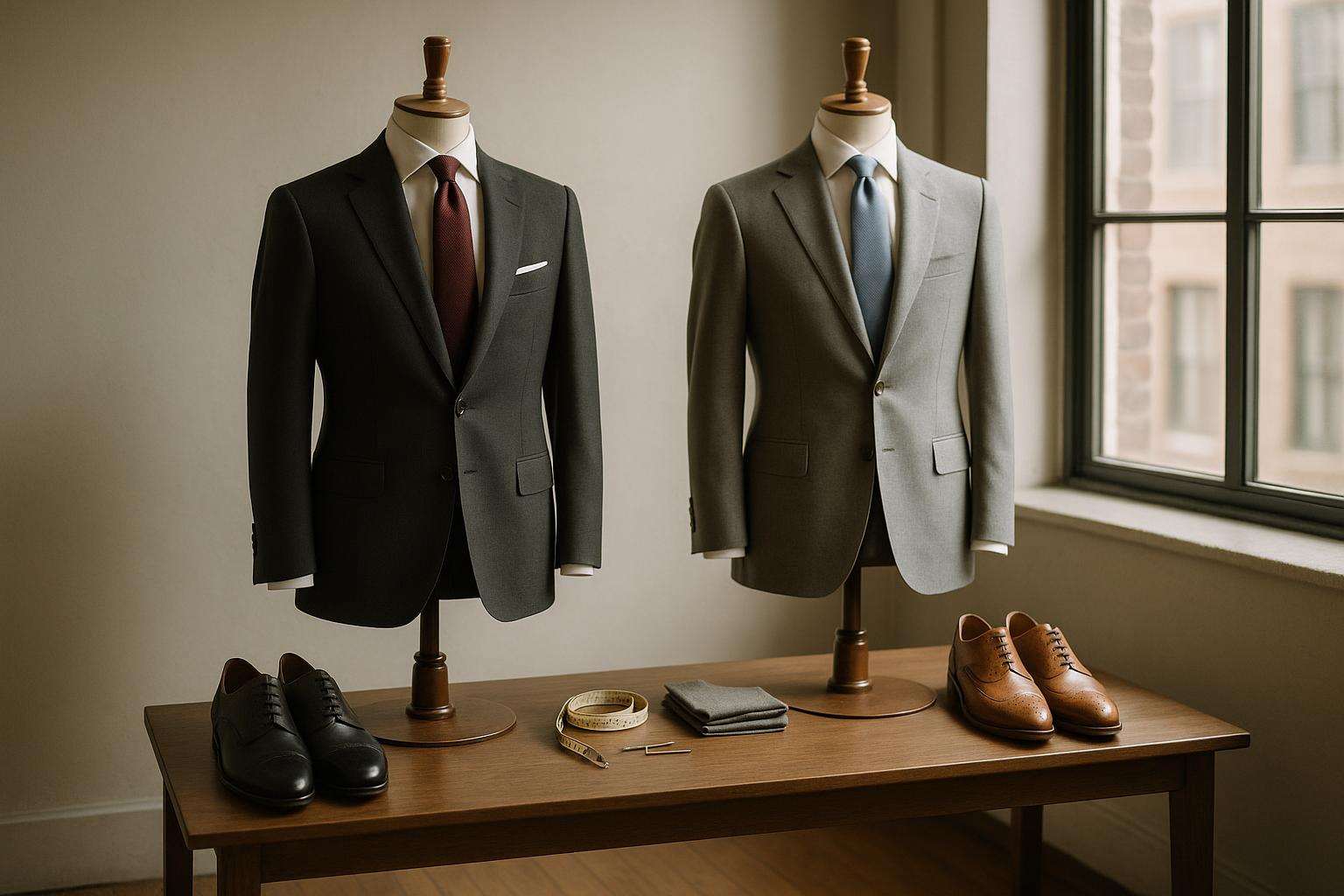
Grey is a spectrum, and the rule is simple: the darker the grey, the more formal the suit. Choose charcoal for a formal, evening, or cool-season wedding, and light grey for a daytime, outdoor, or warm-season one. Medium grey is the year-round hinge that does both. Then let his skin tone, the shoes, and the accent colors fall in behind that one decision.
Grey is the most-chosen wedding suit family in the United States, and not by accident. One color quietly spans an entire formality range, flatters nearly every complexion, and photographs cleanly in almost any light. So the question a groom faces — or the question you face, helping him choose — is rarely "grey or not." It is which grey. Get that single decision right and everything else, from his shoes to his tie, follows almost on its own.
What is the difference between a charcoal and a light grey wedding suit?
Picture grey as a dial that runs from pale silver at one end to a deep, near-black charcoal at the other. As that dial turns darker, the suit turns more formal. Menswear specialists describe charcoal as "the closest thing to a black suit without being one" — the shade that carries the most authority in photographs and moves most naturally into evening and formal settings. Light grey lives at the opposite end: fresh, approachable, and unmistakably daytime, reading as smart-casual to semi-formal rather than black-tie adjacent.
Three landmarks are worth holding in mind:
- Light grey — semi-formal and below; cooling, daylight-friendly, endlessly accent-able with color.
- Medium grey — the occasion-agnostic middle; right for almost any season, venue, and time of day.
- Charcoal — formal and slimming; the evening and cool-weather grey.
When should a groom wear charcoal versus light grey?
The right grey is set by four things together: dress code, season, venue, and time of day. As Hockerty puts it, formal or evening weddings call for darker shades, while daytime or summer weddings invite lighter tones. Translate that to the dial and the choice becomes obvious.
Reach for charcoal when the invitation reads formal, when the ceremony begins after sunset, or when the calendar says autumn or winter. Its depth feels right against cooler light and richer palettes, and it photographs with quiet command. The one place it can stumble is a bright midday summer wedding outdoors, where it can read heavy.
Reach for light grey for a spring or summer wedding, especially a daytime one in a garden, vineyard, or on a beach. The pale cloth keeps him cooler under the spotlight, photographs softly in daylight, and accepts almost any color the wedding palette throws at it. If he wants one suit that refuses to be wrong, medium grey is the safe, year-round answer that handles both a formal evening and a relaxed afternoon.
| Shade | Formality | Best season | Best venue / time | Shoes |
|---|---|---|---|---|
| Light grey | Smart-casual to semi-formal | Spring / Summer | Outdoor, garden, beach, daytime | Tan or chocolate brown |
| Medium grey | Semi-formal to formal | Year-round | Any venue, day or evening | Oxblood or black |
| Charcoal | Highly formal | Autumn / Winter | Indoor, formal, evening | Black oxford |
How does his skin tone affect which grey to choose?
Grey is unusually kind to most complexions, which is half its appeal — but the goal is always contrast between the suit and his face. A fair, cool-toned groom can be washed out by very pale grey, so he tends to look sharper in medium-to-charcoal, where the suit lends his features definition. A deeper or warmer complexion carries light grey effortlessly, because the contrast is already there. Once the shade is settled, let the accent color do the lifting: pastels such as blush, baby blue, and lavender brighten the lighter suits, while jewel tones — emerald, burgundy, navy — anchor the darker ones. Keep his metal in the silver family, which sits most naturally with grey across tie bars, cufflinks, and lapel pins.
How should the groom's grey relate to his groomsmen?
He should coordinate with his men, never match them outright — and he should always read as the most formal figure in the photographs. A small, deliberate step in tone does the work: a popular and photogenic approach puts the groom in medium or charcoal grey and the groomsmen in a lighter grey, giving clean visual separation while keeping the whole party cohesive. He can sharpen the distinction further with a contrasting waistcoat, a peak lapel, or a boutonnière the others do not wear. Grey is, as Generation Tux notes, the most popular groomsmen color precisely because it supports the groom rather than competing with him.
What do the real options cost, and where should he look?
Three well-known houses cover most grooms' needs. SuitSupply's Lazio is its signature slim cut, made from Italian Vitale Barberis Canonico wool; expect roughly a $499 ticket and a realistic $750 to $800 all-in once tailoring is added — bear in mind the cut runs slim, which matters for a varied party. Indochino offers made-to-measure starting around $499 to $599 in 2026 (sales dip lower), about $649 with alterations, with largely fused construction that trades some drape for price. Brooks Brothers spans the widest range — roughly $119 up to about $1,498 — across Slim, Classic, and Traditional fits, the friendliest spread for a party of different builds. If he will never wear the suit again, renting from a house such as Generation Tux is the most economical route. Whichever he chooses, finish charcoal with black shoes and light grey with brown, keep the metal silver, and the grey will look as considered in the album as it did on the day.
Frequently asked
Is charcoal or light grey more formal for a wedding suit?
Charcoal is more formal. Grey reads as a spectrum, and the simplest rule is that the darker the grey, the more formal it looks. Charcoal sits at the dark end — the closest thing to a black suit without being one — so it carries the most authority in photographs and slips most naturally into evening and black-tie-adjacent ceremonies. Light grey reads smart-casual to semi-formal: fresh, approachable, and right for daytime, but it can look slightly underdressed at a formal evening reception. If the invitation says formal or the ceremony begins after sunset, point him toward charcoal; if it is a daytime garden or beach wedding, light grey is the more natural fit, per Generation Tux's guidance on grey shades.
What season is light grey best for, and what season suits charcoal?
Light grey is a spring and summer suit. The pale cloth photographs beautifully in daylight, accepts almost any floral or color palette as an accent, and — importantly — keeps the groom cooler than a dark shade under a warm-weather spotlight. Charcoal is an autumn and winter suit, and an evening one in any season: its depth feels right against cooler light and richer color palettes, and it can read as heavy or out of place at a bright midday summer ceremony. Medium grey is the year-round hinge between them, comfortable in any season and at almost any time of day.
Which grey suits his skin tone best?
Grey is forgiving across complexions, which is part of why it is so popular, but contrast is the thing to manage. A fair, cool-toned groom can be washed out by very pale grey, so he usually looks sharper in medium-to-charcoal grey, where the suit gives his face contrast. A deeper or warm-toned complexion carries light grey beautifully because the contrast is already high. Let the accent color follow the suit: blush, baby blue, or lavender lift a lighter suit, while emerald, burgundy, or navy anchor a darker one. Keep metal accents — tie bar, cufflinks — in silver tones, which sit best with the whole grey family.
Should the groom wear a different grey than his groomsmen?
Yes — coordinate, do not match exactly. The groom should be the most formal figure in the frame, so a small step in tone sets him apart without breaking the palette. A common and photogenic approach is the groom in medium or charcoal grey with the groomsmen in a lighter grey, which gives clear visual differentiation while keeping everyone cohesive. He can also distinguish himself with a contrasting waistcoat, a different lapel, or a boutonnière the others do not wear. The Knot notes that grey is the most popular groomsmen color precisely because it harmonizes with the groom rather than competing with him.
What shoes and accessories go with each grey?
Match the leather to the depth of the grey. Black oxfords or derbies are the classic finish for a charcoal suit and reinforce its formality, especially for evening. Light grey is warmer and more relaxed, so tan or chocolate brown shoes — brogues for a rustic or garden feel — complete it best. Mid-greys are flexible and look handsome in oxblood for a touch of warmth. For metal, stay in the silver family across tie bars, cufflinks, and lapel pins; gold can fight a cool grey. A white shirt is the failsafe with any grey, while soft pastels work especially well under the lighter shades.
How much should we budget for a grey wedding suit?
It depends on whether he buys ready-to-wear, goes made-to-measure, or rents. A SuitSupply Lazio in Italian wool runs roughly $499 on the ticket and realistically $750 to $800 all-in once tailoring is added. Made-to-measure from Indochino starts around $499 to $599 in 2026, about $649 with alterations, though its construction is largely fused. Brooks Brothers spans the widest range — roughly $119 up to about $1,498 — in Slim, Classic, and Traditional fits, which helps a wedding party with varied body types. Renting from a house like Generation Tux is the lowest-cost route if he will not wear the suit again.