Groom Attire
The Groom's Suit by Season: Fabric, Color, and Weight Through the Year
A seasonal playbook for his suit — the right cloth weight, weave, and color for a winter, spring, summer, or fall wedding, with real fabrics from Suitsupply and Brooks Brothers.
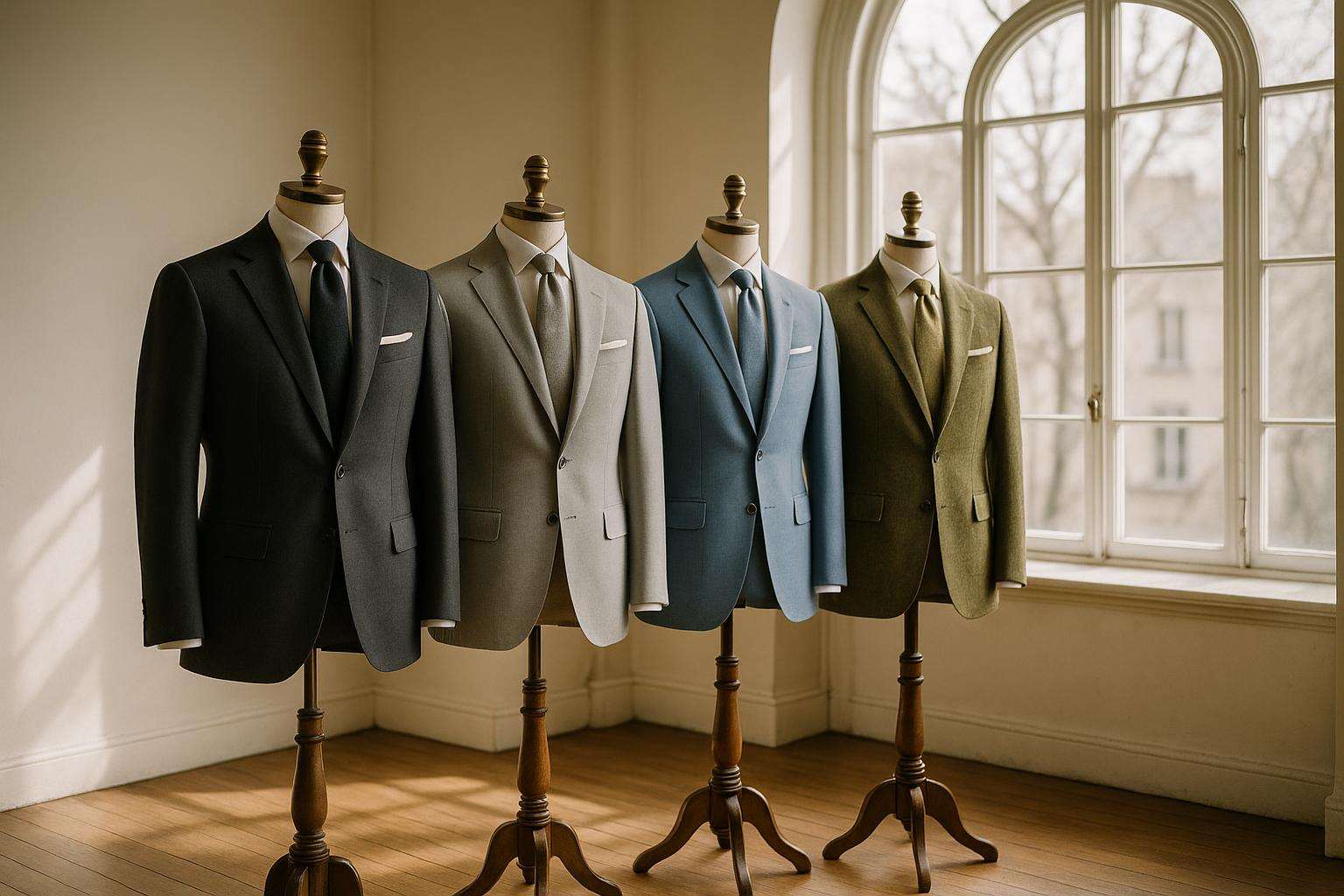
Match his suit's cloth weight and color to the season. Summer wants lightweight open weaves under ~270 GSM (linen, fresco, tropical wool) in pale blue or tan; winter wants brushed flannel or tweed above ~330 GSM in navy or charcoal; spring and fall sit in a mid-weight worsted (290–360 GSM) with softer or richer color respectively. Get the weight right and he is comfortable and photographs sharply across the whole day.
There is one decision about his suit that quietly governs the whole day: whether the cloth is right for the weather. A groom can have the perfect cut and the perfect color, but if he is sweating through a heavy worsted at a July garden ceremony — or shivering in linen at a December one — neither he nor the photographs will look at ease. The good news is that the tailoring tradition has already solved this. Cloth is built for seasons, and once you understand weight, weave, and color, choosing his suit becomes a calm, confident exercise rather than a guess.
What fabric weight should a groom's suit be for each season?
Cloth weight is measured in ounces per yard (oz) or grams per square metre (GSM), and the rule is intuitive: lighter cloth breathes and insulates less; heavier cloth holds warmth and structure. The relationship is the single most useful thing to understand before he sets foot in a fitting room. Moss's cloth-weight guide places anything under about 270 GSM (under 9 oz) firmly in lightweight, warm-weather territory, while 290–360 GSM is the wearable-most-of-the-year band and 400 GSM and above is true cold-weather cloth.
| Season | Best fabrics | Weight (oz / GSM) | Suit colors |
|---|---|---|---|
| Summer | Linen, fresco wool, tropical wool | 6–9 oz / ~170–290 GSM | Pale/sky blue, beige, tan, light grey |
| Spring | Light worsted, fresco, cotton | 9–10.5 oz / ~270–340 GSM | Mid-to-light blue, tan, light grey, blush |
| Fall | Worsted, tweed, brushed wool | 11–15 oz / ~330–430 GSM | Olive, forest green, brown, burgundy, rust |
| Winter | Flannel, tweed, heavy worsted, velvet | 11–15 oz / ~330–430 GSM | Navy, charcoal, black, dark green |
If he is buying a single suit to carry one wedding rather than building a wardrobe, default to a mid-weight worsted of 290–360 GSM. It is the true all-rounder — comfortable across spring and fall, only slightly out of its depth at the height of summer or the depth of winter.
Why is fresco wool the best summer wedding suit fabric?
The instinct in heat is to reach for linen, and linen has its place — it is the most breathable cloth there is, and its relaxed, lived-in wrinkle is part of its charm at a beach or garden wedding. But linen creases by design, and for a formal summer ceremony that can read as careless in photographs. This is where fresco wool earns its reputation. According to Gentleman's Gazette, fresco was invented and trademarked in 1907 by Martin Sons & Co of Huddersfield — today produced by Huddersfield Fine Worsteds — as a high-twist worsted with a porous, open plain weave, named for the Italian word for “fresh.”
The cleverness is in the construction. Several yarns are twisted tightly together, which gives the open weave the strength to resist creasing while letting heat and moisture escape. The result is a cloth that stays crisp through a long, warm day and rebounds from sitting and dancing — it has been called a non-crease alternative to a linen suit. Suitsupply and other modern houses carry fresco and tropical-wool lines for exactly this reason. Tropical wool, at 240–290g, performs similarly with a slightly smoother hand. The one caveat: in very light weights fresco can look almost see-through against the light, so mills weave in subtle color nuance, and a darker or more textured shade hides it best.
What suit colors suit each season?
Color follows the same seasonal arc as cloth. In spring, tones lighten: mid-to-light blue, tan, light grey, and soft blush feel right for outdoor and rustic settings. Summer pushes further toward sky blue, beige, and light grey — colors that don't absorb heat and read crisply in bright sun. As The Knot notes, fall rewards richer, warmer shades: olive and forest green, chocolate brown, rust or burnt orange, and burgundy, which pairs easily with neutrals. Winter returns to deep, formal color — navy and charcoal, with classic black reserved for black-tie and dark green as an elegant alternative.
Two colors break the rules and work year-round: navy and grey. The trick is to adjust the shade — lighter for summer, deeper for winter — rather than abandoning them. That is why a navy or mid-grey worsted makes such a sensible single purchase for a groom who wants one suit to do everything.
What is the best fabric for a winter groom's suit?
Cold weather is where heavier, brushed wools come into their own. Flannel is the refined choice: a soft, napped wool at 11–14 oz (330–400 GSM) that insulates without bulk and drapes with a quiet luxury. The Brooks Brothers 1818 Collection offers wool flannel woven by Italy's Reda mill with half-canvas construction — a charcoal-grey flannel is about as classic as a winter groom's suit gets. Tweed is the more rustic cousin, heavier still at 13–15 oz (400+ GSM) and rooted in country-estate dress; it shines at a barn, lodge, or countryside wedding and feels out of place in a polished city ballroom.
For the most formal winter weddings — especially evening, candlelit affairs — a heavy worsted in charcoal or navy, or even a velvet jacket, brings warmth and a sense of occasion. Whatever the cloth, the principle holds: in winter, weight and depth of color do the work that lightness and airiness do in summer.
How early should he choose the cloth, and how does it affect the rest of the look?
Choose the fabric first, then build the rest of the look around it — not the other way around. Cloth dictates how the suit drapes, how it photographs, and how it feels by hour ten, so it should anchor every later decision about shirt, tie, and accessories. Practically, he should settle on weight and color several months out, because the heavier and more specialist the cloth (a true tweed, a particular fresco), the longer it may take to source or have made, and the more alteration time a buy-it-once suit deserves.
Once the cloth is right, the accessories follow naturally: lighter, airier fabrics invite pastel and earth-tone ties for spring and summer, while flannel and tweed welcome richer silk, knit ties, and textured pocket squares in winter. The season chose the cloth; the cloth then quietly sets the tone for everything he wears with it — and for a groom, that is exactly the kind of decision that, made well and made early, simply disappears into a day that feels effortless.
Frequently asked
What fabric weight should a groom's suit be for a summer wedding?
For a warm-weather ceremony, look for cloth under roughly 270 GSM (under about 9 oz) — the open weave lets heat and moisture escape so he stays cool through the toasts. Linen runs the lightest at 6–8 oz, fresco wool sits around 220g, and tropical wool falls between 240–290g. According to Generation Tux's fabric guide, these lightweight weaves resist wrinkles better than most people expect. If his summer wedding is formal, steer him toward fresco or tropical wool rather than linen, which is built to crease.
Is wool too hot for a summer groom's suit?
No — and this surprises a lot of couples. Tropical and fresco wools are specifically engineered for heat. Fresco is a high-twist worsted with a porous plain weave; the tightly twisted yarns trap less insulating air and the open structure lets the suit breathe. As Gentleman's Gazette explains, it was created in 1907 precisely to keep formally dressed men cool in hot, humid climates. So a lightweight wool can actually outperform a heavy cotton suit in July, while holding a sharper line than linen.
What color suit should the groom wear for a fall wedding?
Autumn rewards richer, warmer color. The Knot points to earth tones — olive, forest green, chocolate brown, and rust or burnt orange — alongside burgundy, which pairs easily with neutrals and reads beautifully in autumn light. Texture matters too: a tweed or a brushed wool suit suits the season's heavier mood and warmer venues. If he wants something more classic, a deep navy still works for fall; just lean into a richer tie and a heavier cloth than he'd choose in spring.
Can one suit work for a wedding in any season?
Yes, if it's chosen as an all-rounder. A mid-weight worsted wool between 290 and 360 GSM (roughly 9.5–11 oz) is wearable most of the year, per Moss's cloth-weight guide. In a versatile color — navy or mid-grey — it carries a spring garden ceremony and a fall reception equally well. The compromise is at the extremes: it will feel warm at a beach wedding in August and a touch light at an outdoor December ceremony. For most couples planning one wedding, a 290–360 GSM worsted is the safest single buy.
What is the best fabric for a winter groom's suit?
For cold-weather warmth, flannel and tweed lead. Flannel is a brushed wool at 11–14 oz (330–400 GSM) that insulates without bulk and has a soft, refined hand — Brooks Brothers' 1818 Collection offers wool flannel woven by Italy's Reda mill. Tweed runs heavier at 13–15 oz (400+ GSM) and reads more rustic, ideal for a countryside or estate wedding. In color, winter favors navy and charcoal, with classic black reserved for black-tie. Velvet is a luxe alternative for a candlelit or formal venue.