Accessories
Black vs. Brown Wedding Shoes: The Color Rules
Which shoe color his suit actually demands — the black-tie black-only rule, the navy and grey pairings, and how the belt has to match.
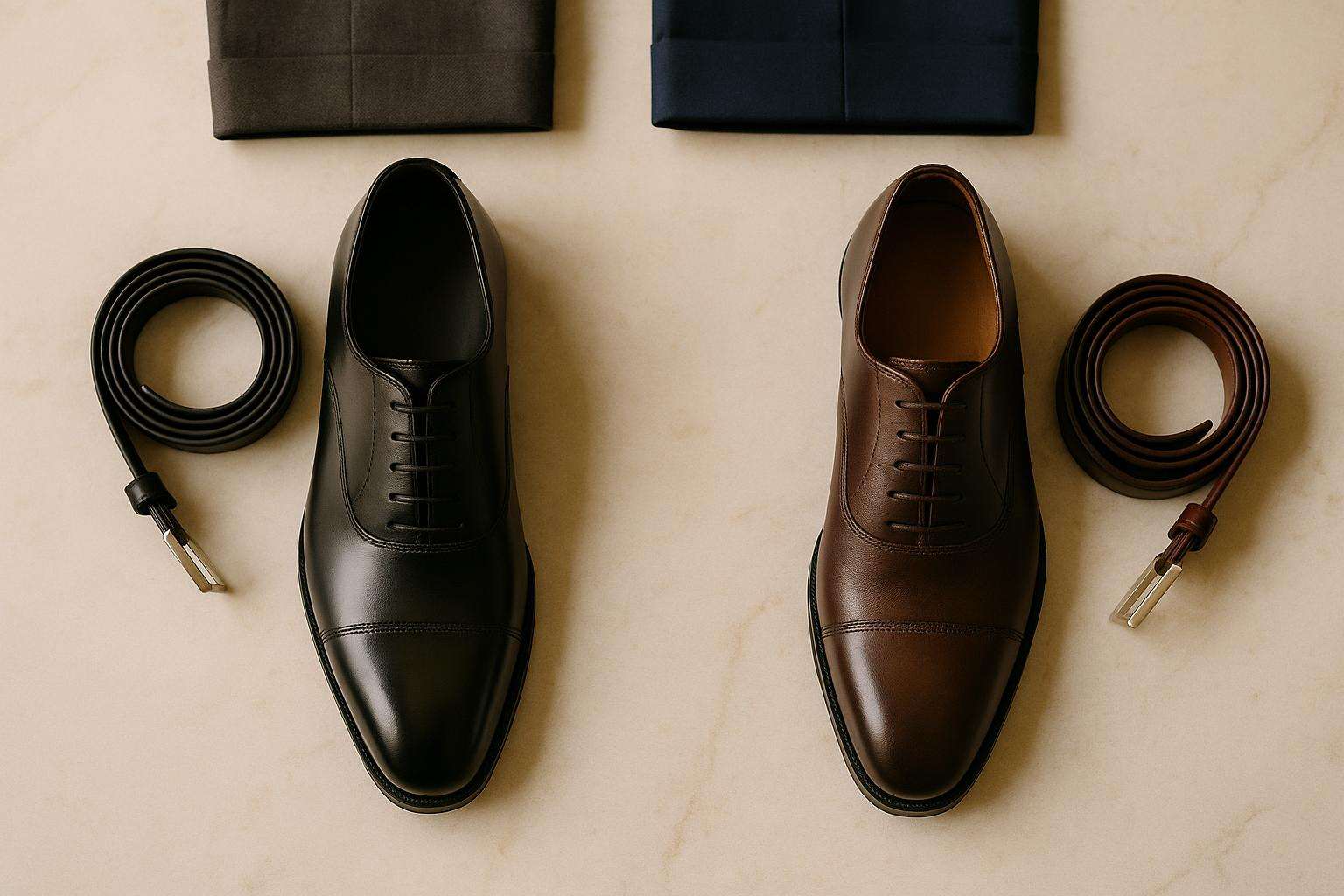
Two things decide his wedding shoe color: the suit and the formality of the day. Black is the more formal, always-correct default and the only color allowed with a tuxedo, a black suit, or a "Black Tie" invitation. Dark brown is the warmer, daytime-and-outdoor choice that pairs especially well with navy and grey. Whatever he picks, the belt must match the shoe in both color and finish.
Shoe color feels like a small thing until the photographs come back. It is, in truth, one of the easiest details to get right and one of the most noticeable to get wrong. You do not need an encyclopedia of menswear to dress his feet correctly for the aisle — you need two questions answered: what color is his suit, and how formal is the day? Settle those, and the shoe almost chooses itself.
What actually decides whether he wears black or brown?
Black is the more formal of the two colors. It is at home in the evening, indoors, and at every dress code from a business suit up to black tie, which is exactly why every authority names it the safe answer when you are uncertain. Brown is the warmer, more relaxed color — historically "country" footwear — and it looks its best in daylight, outdoors, and in the kind of natural light that flatters a garden ceremony.
The tradition behind this is older than the wedding industry. As Gentleman's Gazette explains, black has always signaled formality and business while brown signaled leisure. The dusty maxims — "no brown in town," "no brown after six" — have been relaxed since the 1950s, so brown now has far more range than your grandfather allowed it. But one carve-out survives intact: black shoes are imperative for black tie. Keep that in your pocket and the rest is comfortable judgment rather than rigid law.
One refinement matters for a wedding specifically: keep the brown dark. Espresso, chocolate, and deep chestnut read as deliberate and dressy. Light tan, however handsome on a summer Saturday, looks too casual beside a ceremony suit.
Which shoe color does each suit color demand?
This is the part to commit to memory. The suit leads; the shoe follows. The table below is the whole decision at a glance, synthesized from The Knot and Westwood Hart.
| Suit | Best shoe color | Why |
|---|---|---|
| Tuxedo / dinner suit | Black only | Black patent or high-shine calf Oxfords. Brown is never correct. |
| Black suit | Black | Brown against black reads as an oversight, not a choice. |
| Charcoal suit | Black (or dark brown by day) | Black for evening/formal; deep brown works for daytime, kept low-contrast. |
| Navy suit | Dark brown / cognac (or black for evening) | Navy-and-brown is the modern, photogenic pairing; black for a dressier night. |
| Mid / light grey suit | Brown (shade to formality) | Grey loves brown; black is the more formal alternative and never wrong. |
Notice the pattern: as the suit and the occasion get darker and dressier, the shoe trends toward black; as the day softens into outdoor, daytime, and navy or grey, brown earns its place. If his suit is navy and the wedding is a vineyard at four in the afternoon, dark brown is genuinely the better-looking choice — not a compromise.
What is the black-tie shoe rule — and is it really absolute?
It is the one unbendable rule in this entire piece, so it deserves its own breath. A black-tie invitation, or any tuxedo, calls for black, lace-up Oxfords. Patent leather is the traditional material; well-polished black calf is the widely accepted modern substitute if patent feels like a step too far. The shoe must be simple, sleek, black, and laced — which rules out derbies, brogues, wingtips, and loafers, all of which carry too much everyday-shoe association for the code. The opera pump (the court shoe) is the other traditional black-tie option for the sartorially adventurous.
Brown is categorically out at black tie. There is no daytime exception, no "but it's outdoors" loophole, no clever workaround. As He Spoke Style frames it, this is one of the few menswear details with no room to improvise — and a groom who gets it right looks effortlessly correct in every frame.
How should his belt match his shoes?
Here is the rule that quietly ties the whole look together, and the one most often broken: the belt must match the shoes in both color and finish. Black shoes take a black belt; brown shoes take a brown belt; a high-shine Oxford takes a polished belt, and a matte or suede shoe takes a matte belt. The reason is simple — the eye reads belt and shoes as a single frame around the outfit. When they agree, the whole look settles; when they clash, the eye snags on the conflict and stops seeing the suit at all.
A black belt under brown shoes is the fastest way to look as though he dressed in the dark, so it is worth a deliberate check before he walks out the door. Match the shade as well as the color: espresso shoes want an espresso belt, chestnut wants chestnut. At black tie, the move is a slim black belt to match patent Oxfords — or, more traditionally still, no belt at all, with the trousers held by side-adjusters under a cummerbund or low waistcoat. Keep the buckle narrow and simple, and match its metal to his watch and cufflinks so the small details speak to one another.
So what should he wear?
If the day is formal, in the evening, or anywhere near black tie, put him in polished black Oxfords with a matching black belt and stop second-guessing. If the wedding is a daytime or outdoor affair and his suit is navy or grey, dark brown Oxfords with a matching brown belt will look warmer, more personal, and lovely in natural light. Either way, the shoe answers to the suit, the belt answers to the shoe, and the result is a groom who looks entirely, quietly right — which is precisely the goal.
Frequently asked
Black or brown wedding shoes — which is the safer choice?
Black is the safer choice. It is the more formal of the two colors and is always correct in a dressy setting, which is why every menswear guide names it the default when you are unsure. Choose black when the day is formal, indoors, in the evening, or when the invitation hints at black tie. Reach for brown only when the wedding genuinely leans daytime, outdoor, or garden, and his suit is navy or grey. If you have time for only one decision, put him in polished black Oxfords and move on with confidence.
Can he wear brown shoes to an evening wedding?
He can, but it is the weaker call. The old "no brown after six" rule has been relaxed since the 1950s, so dark brown is not forbidden at an evening reception with a navy or grey suit. That said, brown reads warmer and more casual, and it photographs best in daylight, so it loses some of its charm under evening lighting. If the evening event is formal — and certainly if it is black tie — keep him in black. Brown belongs to the daytime and the garden far more comfortably than to a candlelit ballroom.
What color shoes go with a navy wedding suit?
Dark brown or cognac is often the stronger, more modern pairing with navy, and it looks especially good outdoors and in photographs. Black also works with navy and is the right choice for an evening or black-tie-leaning navy look. The one thing to avoid is light tan, which reads too casual for a ceremony. Keep the brown deep — espresso, chocolate, or dark chestnut — and match the belt to whichever you pick. The Knot treats navy-and-brown as a well-established, dependable combination.
Does he have to match his belt to his shoes?
Yes — and it is the single rule worth enforcing. The belt should match the shoes in both color and finish: black shoes take a black belt, brown shoes a brown belt, and a polished shoe takes a polished belt. The eye reads belt and shoes as one frame around the whole outfit, so a black belt under brown shoes immediately looks like an accident. At black tie he should wear a slim black belt to match patent shoes, or skip the belt entirely under a cummerbund or side-adjusted trousers, which is the most traditional approach.
What shoes are correct for a black-tie wedding?
Black, lace-up Oxfords — and nothing else. Patent leather is the traditional material; high-shine polished black calf is the widely accepted modern substitute. The shoe must be simple, sleek, black, and laced, which rules out derbies, brogues, wingtips, and loafers as too casual for the code. The opera pump is the other traditional option. Brown is categorically wrong at black tie. As He Spoke Style puts it, the black-tie shoe is one of the few details with no room to improvise.
Can a groom wear brown shoes with a charcoal or grey suit?
With charcoal, black is the more formal and safer default, but dark brown works for a daytime ceremony as long as the brown is deep enough to keep the contrast low against the dark cloth. With mid or light grey, brown is a genuinely lovely choice — match the shade to the formality, going darker for a dressier feel. Black is never wrong with grey; it simply reads more formal. The decision comes down to the time of day and the mood of the wedding rather than any hard prohibition.