Grooming
How to Groom Your Beard for the Wedding
Once he is keeping the beard, the whole look comes down to two lines and one calendar — here is how to place the neckline and cheek line, choose a fade or a hard line, and time the barber for the camera.
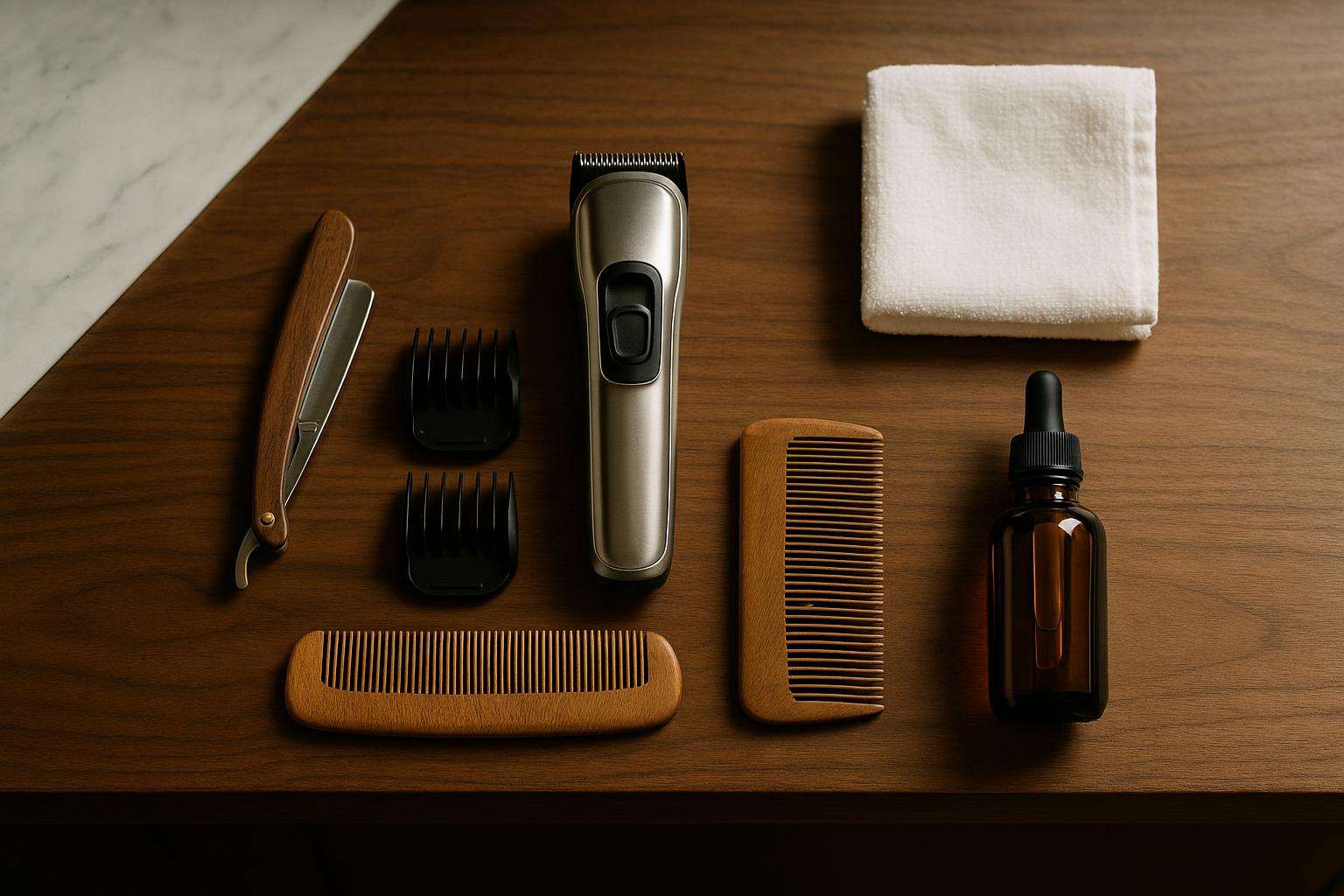
A camera-ready beard is not about length — it is about two lines done well and timed right. Set the neckline two fingers above the Adam's apple in a soft U, keep the cheek line natural but clean, and book the barber for a trial four to six weeks out and a final cut two to three days before the ceremony. Choose a softer faded neckline over a hard line if he is at all unsure — it is the more forgiving, more natural look in photographs.
You have had the harder conversation already — the beard is staying. What is left is execution, and this is the part that actually shows up in the photographs you will keep. A great wedding beard is not a longer beard or a more expensive one; it is a beard with two well-placed lines, cut on the right day, and kept simply between now and then. None of it is complicated, but each piece has a right answer, and getting them right is what separates looks like he takes care of himself from looks like he forgot. Here is how to shepherd him through it.
When should the groom book his barber for the wedding?
The single most useful thing you can do is get two appointments on the calendar now. The first is a trial cut four to six weeks before the wedding. This sets the foundational shape — length, taper, and texture — and, just as importantly, lets him find out whether this barber is the right one before the stakes are real. If something is off, there is a month to grow it back and try again.
The second is the one that matters most for the camera: the final cut two to three days before the ceremony, the rule barbers call the 72-hour window. Cut any closer and the skin along the neck and temples can look pale and faintly irritated where the clippers ran, and the whole beard reads as freshly done rather than naturally polished. Wait much longer than five or six days and a tight neckline begins to show regrowth along the edge. Two to three days is the sweet spot where the lines have softened just enough to look like him on a very good day. Whoever takes him should mention it is for a wedding — a good barber keeps the taper and neckline more conservative when he knows it is for the aisle.
Where exactly does the beard neckline go?
The neckline is where almost every man goes wrong, and the error is nearly always the same: cutting it too high. The barber standard is the two-finger rule. Place two fingers horizontally just above the Adam's apple; the top of the upper finger is the lowest point of the neckline. From that center point the line should travel in a shallow U up toward the back of the ears, following the curve of the jaw — not a flat horizontal line, which looks boxed-in and severe, as The Gentleman's Journal lays out.
Why does cutting too high backfire? Because a neckline shaved up onto the jaw makes the jawline look weaker, not stronger, and leaves the beard looking perched on the chin instead of integrated with the face. Philips Norelco's shaping guide makes the same point: on a longer beard, too high a line slides toward a chin-strap. The other quiet trap is upward creep from constant little touch-ups — fix a stray patch on Monday, another on Tuesday, and by the weekend the whole line has migrated up the jaw. The safe instinct before the wedding is to set the neckline a touch lower than feels natural; it can always be tightened, but it cannot be un-shaved before the photos.
Should he choose a beard fade or a hard line for the photos?
The cheek line is the top edge of the beard, running from where the sideburn meets the beard toward the corner of the mouth. Keep it close to the natural growth line — dropping it too low only works if he genuinely wants a chin-strap. The bigger decision is how the edges are finished: a crisp hard line, or a soft fade. The two send different signals.
| Finish | The look | Best for | Watch out for |
|---|---|---|---|
| Hard line | Sharp, shaved edge — precise and intentional | Short, boxed beards; a very put-together look | On a full beard it can read stenciled or artificial in close-up frames |
| Beard fade | Length blends gradually into skin and the haircut | Short-to-medium beards; a modern, natural finish | Needs a skilled barber to blend the fade into the cheek line |
| Clean cheek + soft neck (recommended) | Defined top edge, natural fading neckline — the best of both | Most grooms who want sharp without stiff | Be specific so the barber does not over-define |
As Beardbrand notes, a skilled barber connects the temple fade into the cheek line so the head reads as one intentional shape. For most grooms the camera-friendly answer is a clean, lightly defined cheek line paired with a softer, natural neckline — sharp without looking like a stencil. The brief to give the barber, almost word for word: keep the cheek line natural but clean, a natural neckline rather than a hard box, and connect the fade into the beard.
How does he keep the beard sharp at home?
Between the trial and the day, the job at home is upkeep, not redesign. A clean line holds for roughly two to four weeks depending on growth, which is precisely why the two-appointment plan works — the trial sets the shape, the final cut refreshes it for the camera. The most damaging thing he can do in the last stretch is fiddle: the gradual upward creep that ruins a neckline almost always comes from anxious touch-ups, not from one bad cut. If the barber's lines are sharp, leave them alone and condition the beard daily.
The kit can be short. Jack Black Beard Lube Conditioning Shave (around $22) doubles as a pre-shave oil and a clear shave cream — the see-through texture is genuinely useful when tracing a neck or cheek edge, because he can see the skin he is working. For daily softness, Baxter of California's Beard Grooming Oil (around $29) uses squalane, avocado oil, and Vitamin E to condition the hair and the skin beneath and tame flyaways for the photographs. Add a fine comb and a calming post-shave balm for the morning of, which quiets any redness before the first-look frames. That is the whole list — a beard looks expensive when it is conditioned and well-edged, not when it is buried under product.
Reassure him on this point: nobody at the wedding is going to study the geometry of his neckline. What they — and the camera — will register is whether the beard looks intended: clean where it should be clean, soft where it should be soft, and unmistakably like him at his best. Two good lines, the right appointment, and a light hand for two weeks will get him there.
Frequently asked
When should the groom get his beard trimmed before the wedding?
Book two appointments. A trial trim four to six weeks out sets the foundational shape and lets him audition the barber, then a final appointment two to three days before the ceremony — the so-called 72-hour rule. That window is close enough that the lines are crisp but far enough that any clipper-pale skin along the neck and temples has settled, so the beard photographs naturally rather than freshly cut. A trim the day before tends to look stark and slightly irritated under camera lights; wait much past five or six days and a tight neckline starts to show regrowth. Always tell the barber it is for a wedding so he keeps the taper conservative.
Where exactly should a beard neckline sit?
Use the two-finger rule: place two fingers horizontally above the Adam's apple, and the top of the upper finger marks the lowest point of the neckline. From there the line follows a shallow U from ear to ear, dipping slightly in the center and curving up along the jaw — never a straight horizontal box, which looks severe. The most common mistake is shaving too high, up onto the jawline itself: it makes the jaw look weaker, not stronger, and leaves the beard looking perched on the chin. When unsure, set it a touch lower; a neckline can always be tightened, but it cannot be un-shaved before the photos.
Is a beard fade or a hard line better for wedding photos?
Both photograph well; it depends on the beard. A hard line — a sharp, shaved edge — signals precision and suits short, boxed beards, but on a fuller beard a crisp neckline can read as stenciled in close-up frames. A beard fade blends length gradually into the skin and the haircut, looking more modern and forgiving. For most grooms the camera-friendly middle ground is a clean, defined cheek line paired with a softer, natural neckline. The simplest brief for the barber: keep the cheek line natural but clean, a natural neckline rather than a hard box, and connect the fade into the beard.
What beard products should be in his wedding grooming kit?
Keep it to a few proven pieces. Jack Black Beard Lube Conditioning Shave (around $22) is a translucent pre-shave oil and shave cream in one, and the see-through texture makes it easy to trace clean neck and cheek edges. For daily conditioning, Baxter of California Beard Grooming Oil (around $29) softens the beard and the skin beneath with squalane, avocado oil, and Vitamin E. Add a fine comb and, for the morning of, a calming post-shave balm to reduce any redness before the first-look photographs.
How often should he touch up the lines between appointments?
Most beards hold a clean line for two to four weeks, depending on growth rate, which is exactly why the four-to-six-week trial and the 72-hour final cut work so well together. Resist the urge to do constant little touch-ups at home in the final stretch — fixing a small unevenness one day and another the next is how a neckline slowly creeps up the jaw and ends up too high by the wedding. If the edges are sharp from the barber, leave them alone and simply condition the beard daily. A softer, faded edge is more forgiving than a hard line if he is nervous about maintaining it himself.
Should he shape his own beard or leave it to the barber?
For the wedding itself, leave the shaping to a barber — the neckline and cheek line are the two things most worth handing to a professional, especially the under-jaw line he cannot easily see. The role at home is upkeep, not redesign: wash, condition, comb, and let the barber's lines stand. If he insists on doing the final tidy himself, have him map the lines first with a light pencil on dry hair so he is following a plan rather than improvising with a razor on the morning of, when nerves and a tight schedule make mistakes far more likely.