Grooming
Should the Groom Self-Tan? The Risks and the Safer Approach
If he wants a little color for the photographs, the danger isn't his health — it's orange palms and a streaked collar. Here is the calm, reversible way to do it right.
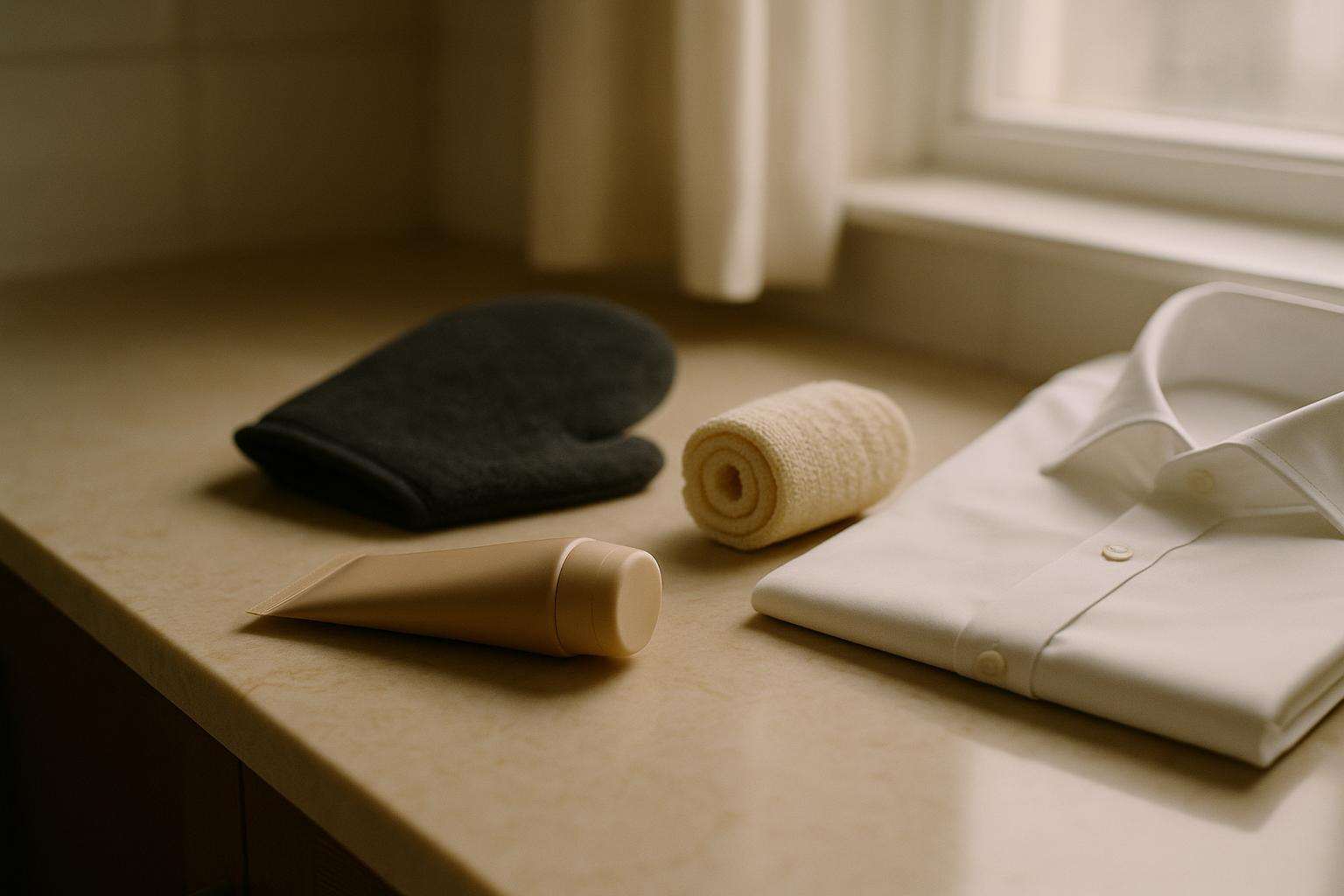
If the groom wants a little color, the threat is photographic, not medical: orange palms, a streaked jaw, a tide line at the collar, and a couple whose tones don't match. The safe approach is a low-DHA gradual lotion built up over several days, applied with a mitt and with the hands done last — plus a full trial weeks ahead. Skip the night-before spray gamble.
Somewhere in the planning, the question surfaces: should he have a little color for the photographs? It is a fair instinct. A man can look washed out under a photographer's flash, and a faint, even glow can read as health and ease in the portraits you will keep for decades. The trouble is that tanning is one of the few grooming choices that can go visibly, permanently wrong in those same portraits. So the goal here is not to talk him out of it — it is to make sure that, if he tans, it is the subtle, reversible, rehearsed kind, and never a last-minute roll of the dice.
What are the real risks of a groom self-tanning before the wedding?
The risks fall into two piles, and only one of them should worry you. The first is cosmetic, and it is the pile that matters on a wedding day. Wedding photographers and beauty editors see the same failures again and again: streaks and blotches where dry patches at the elbows, knuckles and ankles grab color and develop darker than the skin around them; an orange rather than golden tone when the product is too strong or laid on too thick; a visible tide line where an unblended jaw or wrist meets paler skin; and the most common groom mistake of all, stained palms and knuckles that turn the close-up ring shots faintly orange.
Two more couple-level failures deserve a flag. Bronzer can rub onto a white dress-shirt collar and cuffs, leaving an orange collar in the very photos meant to show off his suit. And a groom who tans much darker — or oranger — than his partner reads badly in paired portraits; the editors at Hello! Magazine are emphatic that no one should chase a deep tan purely to match someone else.
The second pile is safety, and for lotions it is largely overstated. The active ingredient in essentially every self-tanner is DHA (dihydroxyacetone), which the U.S. Food and Drug Administration has approved for external cosmetic use since the 1970s; it reacts only with dead cells on the skin's surface and does not enter the bloodstream, and dermatologists endorse it as far safer than a tanning bed. The genuine caveat is spraying: the FDA notes DHA is not approved for inhalation or for the eyes, lips and mucous membranes — and a booth mist makes that exposure hard to avoid. That single fact is the strongest argument for a controlled lotion over a booth.
Should the groom use a gradual self-tanner or get a spray tan?
For most grooms, a low-DHA gradual lotion is the safer, more forgiving route. Gradual formulas use a lower DHA concentration, develop slowly over three to five days, and let him stop the moment the color looks right — there is no single, high-stakes application to ruin. As DHA explainers note, the orange tone comes from too much pigment reacting at once, so building color in thin daily layers is exactly how you avoid it. Formulas with a green or violet base further neutralize that orange potential.
A professional spray can look immaculate in a skilled technician's hands — but it is a one-shot, less-reversible event, it deposits more bronzer onto collars and cuffs, and it carries the inhalation caveat above. If he is set on a spray, the editorial consensus is firm: book it 48 to 72 hours before the day so the guide color rinses and the true tone develops with room to correct, never the night before, and never as a first-ever attempt.
The risks and their fixes, at a glance
| Risk | Why it happens | The safer move |
|---|---|---|
| Orange palms / knuckles | Dry, dead-cell-rich skin grabs DHA | Tan hands last with leftover product; wash palms immediately |
| Streaks at joints | Dry elbows, knees, ankles absorb unevenly | Exfoliate the day before; moisturize joints just before applying |
| Orange tone overall | DHA too high or applied too heavily | Low-DHA gradual lotion in thin daily layers |
| Tide line at jaw / wrist | Edges left unblended | Blend past the jawline, wrists and ankles with a mitt |
| Orange shirt collar | Bronzer transfers onto fabric | White-shirt test after the first shower; let tan fully set |
| Couple mismatch | Tanning to over-match a partner | Keep it subtle; tan for himself, not to match |
How can the groom avoid streaks and orange hands?
The mechanics are simple and they are mostly about preparation. Exfoliate the day before with a mitt or gentle scrub, paying attention to the elbows, knees, knuckles and ankles, then moisturize those dry joints just before applying. Apply with a mitt in thin, even, circular passes, blending down past the wrists, ankles and jawline so there is no hard edge anywhere. Do the hands last, using only the product already left on the mitt rather than fresh lotion, and wash the palms straight away. Build gradually — several thin coats beat one heavy one, because a man can always add a layer, but lifting a too-dark tan means scrubbing, a lemon-and-baking-soda paste, or oil. Finally, run the white-shirt test: after the first shower, wear a plain white tee or collar to confirm no bronzer transfers before the wedding shirt ever goes on.
Above all, keep it subtle. A hint of glow photographs beautifully on a man; an obvious tan looks artificial under flash. Done with restraint and rehearsed in advance, a self-tan is a small, quiet thing that simply makes him look like himself on a very good day — which is the entire point.
Frequently asked
Should the groom self-tan before the wedding at all?
Only if he genuinely wants to — never to chase the bride's tone. A faint, even glow can warm up a man's complexion under flash photography, but the photographs are unforgiving of a heavy or botched tan. If he tans, the rule is restraint: a low-DHA gradual lotion built over several days reads as health, while an obvious bronze reads as fake. Wedding editors are blunt that a groom should never go dark simply to match a partner — a noticeable mismatch in either direction looks worse than two people in their natural skin tones. If he is on the fence, the safest answer is a single, subtle layer of gradual tanner, or nothing at all.
Is self-tanner safe for men's skin?
Yes, when it's a lotion or cream. The active ingredient, DHA (dihydroxyacetone), has been on the FDA's approved list for external cosmetic use since the 1970s; it reacts only with dead cells on the skin's surface and does not enter the bloodstream, and dermatologists endorse it as far safer than a UV bed. The one real caveat is spraying: the FDA notes DHA is not approved for inhalation or for the eyes, lips and mucous membranes, and a booth mist makes that hard to avoid. For a groom, a carefully applied lotion sidesteps that concern entirely while giving him more control over the result.
Gradual self-tanner or a professional spray tan for the groom?
For most grooms, a gradual lotion is the smarter bet. Gradual formulas use lower DHA, develop over three to five days, and let him stop the moment the color looks right — there is no single high-stakes application to ruin. A professional spray can look flawless in skilled hands, but it is a one-shot event, it deposits more bronzer onto collars and cuffs, and it carries the inhalation caveat. If he prefers a spray, book it 48 to 72 hours before the day so it settles and any fix is possible, and never let the wedding be the first time he has ever had one.
How does the groom keep his palms from turning orange?
Palms are dry and full of dead skin, so they grab self-tanner harder than anywhere else — orange hands in the ring shots are the classic groom mistake. Three habits prevent it: tan the hands last, using only the leftover product already on the mitt rather than fresh lotion; wash the palms thoroughly right after applying; and run a light barrier of moisturizer over the knuckles before the final pass. If color still develops too dark, you can lift it with gentle exfoliation or a lemon-and-baking-soda paste well before the wedding. Doing this during a trial run is exactly how he learns his own hands.
When should the groom do a trial tan?
Weeks ahead — never the night before. Every credible source agrees the trial is non-negotiable, because skin tone, product shade and application all vary from person to person. Time the trial so the developed color is on his skin during the suit fitting and any photo or grooming test, which lets him judge it against a white shirt collar and against his partner's tone. The trial is also when he learns how dark his particular skin goes, how his hands behave, and whether bronzer transfers onto a collar. Treat it as a dress rehearsal, then repeat the exact same process for the real thing.
How soon before the wedding should the final tan go on?
For a gradual lotion, begin building color about five to seven days out, applying thin layers daily and stopping once the tone looks right — usually a day or two before the wedding, so any minor unevenness has time to settle or be buffed. For a professional spray, the window is tighter: 48 to 72 hours before the ceremony, which lets the guide color rinse off and the true tone develop while leaving room to correct a problem. In both cases, avoid applying the same day, when streaks, a strong product smell, or bronzer transfer onto the shirt are most likely to show.