Grooming
The Closest Clean Shave for Wedding Day Without the Irritation
How he gets a barbershop-close shave that survives a full day of photographs — no razor burn, no bumps, no redness.
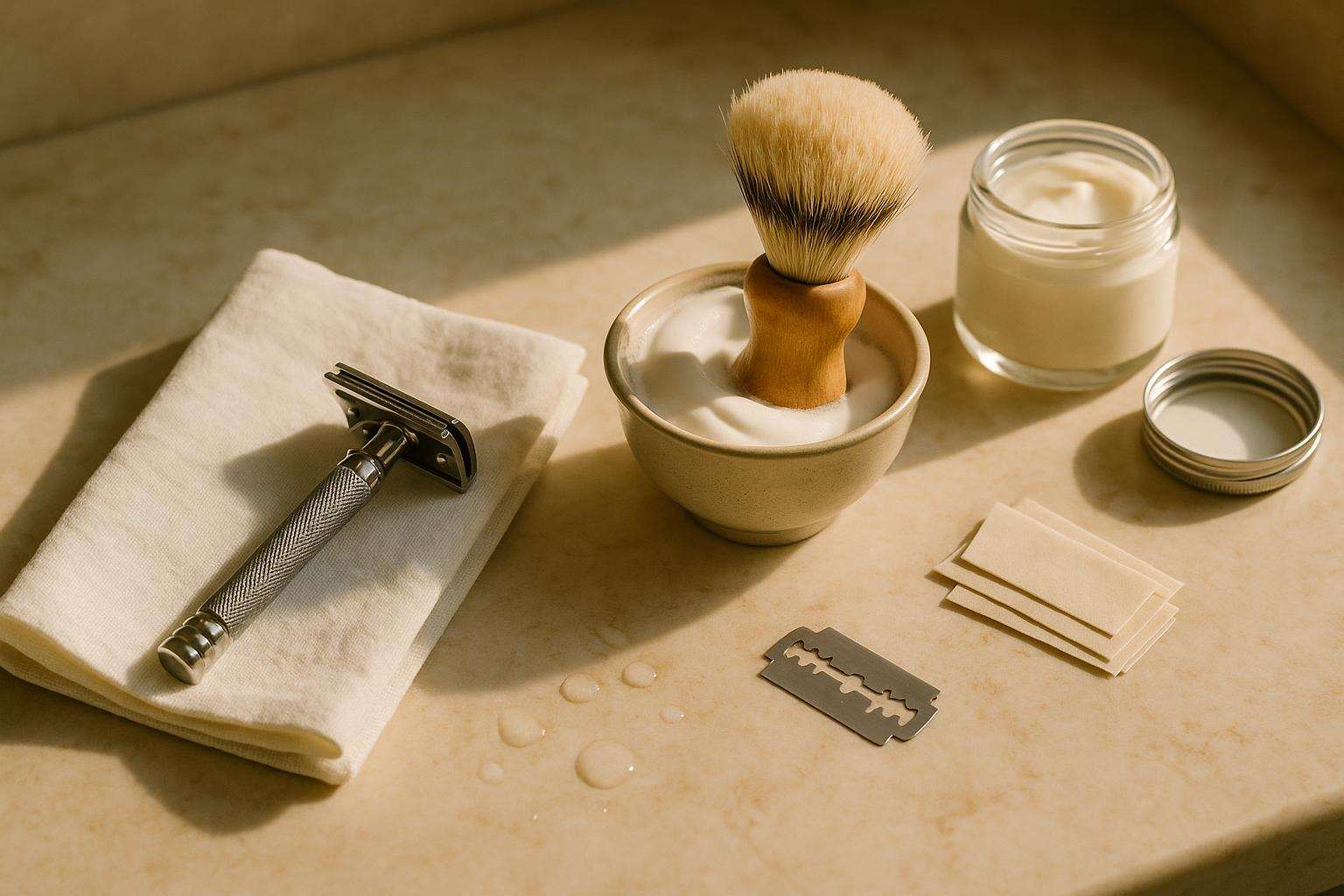
A clean wedding-day shave is won in the days before, not the morning of. Soften the hair with heat, lay down a real lather, take one light pass with the grain (across it at most), then rinse cool and apply an alcohol-free balm. Do a full practice shave two to three weeks out, on the same weekday as the wedding, and never debut a new blade, cream, or aftershave on the day itself.
You want him smooth in the photographs — properly, barbershop-clean smooth — and you want his skin calm, not blotchy and raw, for the hours of close-up portraits that follow. Those two wishes pull gently against each other, and the grooms who get both right treat the shave less like a five-minute morning chore and more like a small, rehearsed routine. The good news: the method is simple, the tools are inexpensive, and nothing about it needs to be a surprise on the day.
This guide is strictly about the clean shave — going smooth. Shaping or maintaining a beard for the wedding is its own craft and lives elsewhere in the grooming section.
What actually causes razor burn and ingrown hairs on a clean shave?
It helps to know the enemy. Razor bumps form when a freshly cut hair curls back into the skin, or is severed just below the surface and re-enters the follicle; razor burn is the broader redness and stinging of friction, blade drag, and over-shaving. The single biggest culprit is shaving against the grain. As the American Academy of Dermatology puts it plainly, going against the grain cuts the hair below skin level and invites it to grow back into the skin.
Multi-blade cartridges make this worse for some men: the lead blades tug the hair proud of the skin so the trailing blades can cut it shorter than the surface. That's closer — and a higher ingrown risk. The AAD even suggests that men who bump easily switch to a single- or two-blade razor and stop stretching the skin taut. The lesson for a photographed day is to bias toward calm skin over baby-smooth at any cost.
How does he get a barbershop-close shave without razor burn?
Every good barber follows the same four beats: prep, lather, a light multi-pass, and aftercare. He can do exactly this at the sink.
Prep — soften before the blade. Shave at the end of a hot shower, or hold a warm, damp towel to the face for two to three minutes. Warmth and water swell the hair so it cuts cleanly instead of tearing. Wash first with a gentle, non-comedogenic cleanser, and exfoliate gently a day or two beforehand — not the morning of — to lift the dead skin that traps hairs. A pre-shave oil adds a final glide layer for a coarse beard.
Lather — real cushion, not canned foam. A genuine shave cream or soap, worked into a lather (a brush helps), builds a cushion that lets the blade glide rather than scrape, per traditional wet-shaving guidance. Re-lather before every pass.
The pass — with the grain, light hand. Use a fresh, sharp blade; a dull one tugs and irritates. Map his grain first — hair usually grows downward on the cheeks, sideways on the neck, upward low on the throat. The first pass goes with the grain. If he wants closer, a careful across-the-grain second pass after re-lathering gets most men to barbershop-close without the ingrown risk of going fully against it. Let the weight of the razor do the work; don't press, and rinse the blade every couple of strokes.
Aftercare — close and calm. Rinse with cool water, pat (don't rub) dry, and apply an alcohol-free post-shave balm or moisturizer with aloe or vitamin E. Skip the stinging high-alcohol splash on a pre-photo face.
When should the groom shave, and why is a practice shave non-negotiable?
Two rules carry the day. The first is the practice shave. Two to three weeks out, on the same weekday as the wedding, he runs the entire routine — same razor, same products, same sequence. It surfaces how his skin reacts, whether a new balm stings, and which way his neck grain truly runs, all while there's still time to fix it. It turns the morning-of shave from an experiment into a known, calm habit.
The second is timing. The table below is the simple decision he needs.
| His situation | Best time to shave | Why |
|---|---|---|
| Average beard, normal skin | Evening before (12–18 hrs ahead) | Redness settles overnight; smoothness still holds for photos |
| Very coarse / fast-growing beard | Morning of | Avoids a five o'clock shadow by the reception |
| Sensitive or bump-prone skin | Evening before + dermatologist plan early | Maximum time for skin to calm; no last-minute reaction |
Whatever he chooses, he should not shave three mornings in a row in the run-up — over-shaved skin reacts. And he should never debut a new razor, blade, cream, or aftershave on the day itself.
Which tools should the groom actually use?
A reliable, accessible kit beats an exotic one. Harry's German-engineered cartridge razors — flex-hinge blades with a lubricating strip and a back precision trimmer — are the forgiving mainstream choice and easy to find, and the brand's own guidance on preventing ingrown hairs is sound. Grooms who want the traditional closest shave can reach for a double-edge safety razor: one sharp blade, a close and low-irritation result, and far cheaper refills, with Feather blades regarded as the sharpest (he should test gentler brands first). For coarse, curly, bump-prone beards, a system like Bevel is built for exactly that skin.
Whichever he prefers, the order of importance never changes: prep and technique first, then the blade, then the brand. Get those beats right and he'll look unmistakably like himself — smooth, comfortable, and entirely at ease — in every photograph from the first look to the last dance.
Frequently asked
Should the groom shave the morning of the wedding or the night before?
For most grooms, a clean shave done 12 to 18 hours ahead — the evening before — is the sweet spot: any transient redness settles overnight while the smooth result still holds through an evening of photographs. If his beard is very coarse and shows a five o'clock shadow by afternoon, shaving the morning of keeps him looking crisp for the ceremony. The one rule that doesn't bend: don't shave three mornings in a row in the run-up, because over-shaved skin reacts. Pick the timing during his practice shave and keep it identical on the day.
Why does a practice shave matter so much?
Because the wedding day is the worst possible time to discover that a new balm stings, that a blade tugs, or that his neck grain runs sideways. A full dress-rehearsal shave — same razor, same lather, same sequence — done two to three weeks out on the same weekday as the wedding shows exactly how his skin reacts while there's still time to adjust. It turns the morning-of shave into a known, calm routine instead of an experiment. Never debut a new razor, blade, cream, or aftershave on the wedding day itself.
Is a safety razor or a cartridge razor better for a wedding shave?
Both can deliver a beautiful result; the choice is about temperament. A cartridge razor like Harry's is the forgiving, low-learning-curve option — flex-hinge blades follow the face and it's widely stocked. A double-edge safety razor uses one sharp blade for a traditional, very close, low-irritation shave and far cheaper blades, but it rewards a little practice. The American Academy of Dermatology even suggests men prone to bumps try a single- or two-blade razor, since some multi-blade cartridges cut too close. Whichever he prefers, technique and prep matter more than the brand.
How does he stop razor burn and ingrown hairs before the photos?
Four habits do most of the work. Prep: shave after a hot shower or a warm towel so the hair is soft. Lather: use a real shave cream or soap for a protective cushion, and re-lather before each pass. Direction: go with the grain first — going against it is the single biggest cause of bumps, per the AAD. Aftercare: rinse cool, pat dry, and apply an alcohol-free balm. Use a fresh blade and a light hand, and don't stretch the skin taut.
What should he do if he gets razor bumps or has very sensitive skin?
If he bumps chronically — especially with coarse or curly hair — start early. Systems built for bump-prone skin, such as Bevel, plus a strict with-the-grain technique and gentle exfoliation a day or two before, prevent most of it. If bumps persist after he's fixed his habits, the AAD advises seeing a board-certified dermatologist well ahead of the date, because untreated razor bumps can leave lasting grooves and scars. Don't leave a chronic reaction to be solved in the final week.
How long before the wedding should he buy and break in his shaving kit?
Have the full kit — razor, a supply of fresh blades, shave cream or soap, a brush if he wants one, and an alcohol-free balm — in hand at least three to four weeks out. That leaves room for one or two practice shaves to confirm the products agree with his skin and to dial in his grain map and timing. Buying everything the week of the wedding is how grooms end up with a reactive new product and red skin in the photographs. Replace cartridges every five to seven shaves so the blade is fresh, not dull, on the day.