The Groom's Role
The Groom's Day-Of Attire Timeline: When to Dress and Stay Sharp
His getting-ready runway is short, but the moves carry the whole day. Here is the order to dress him, when to pin the boutonniere, and how to keep him crisp from first look to send-off.
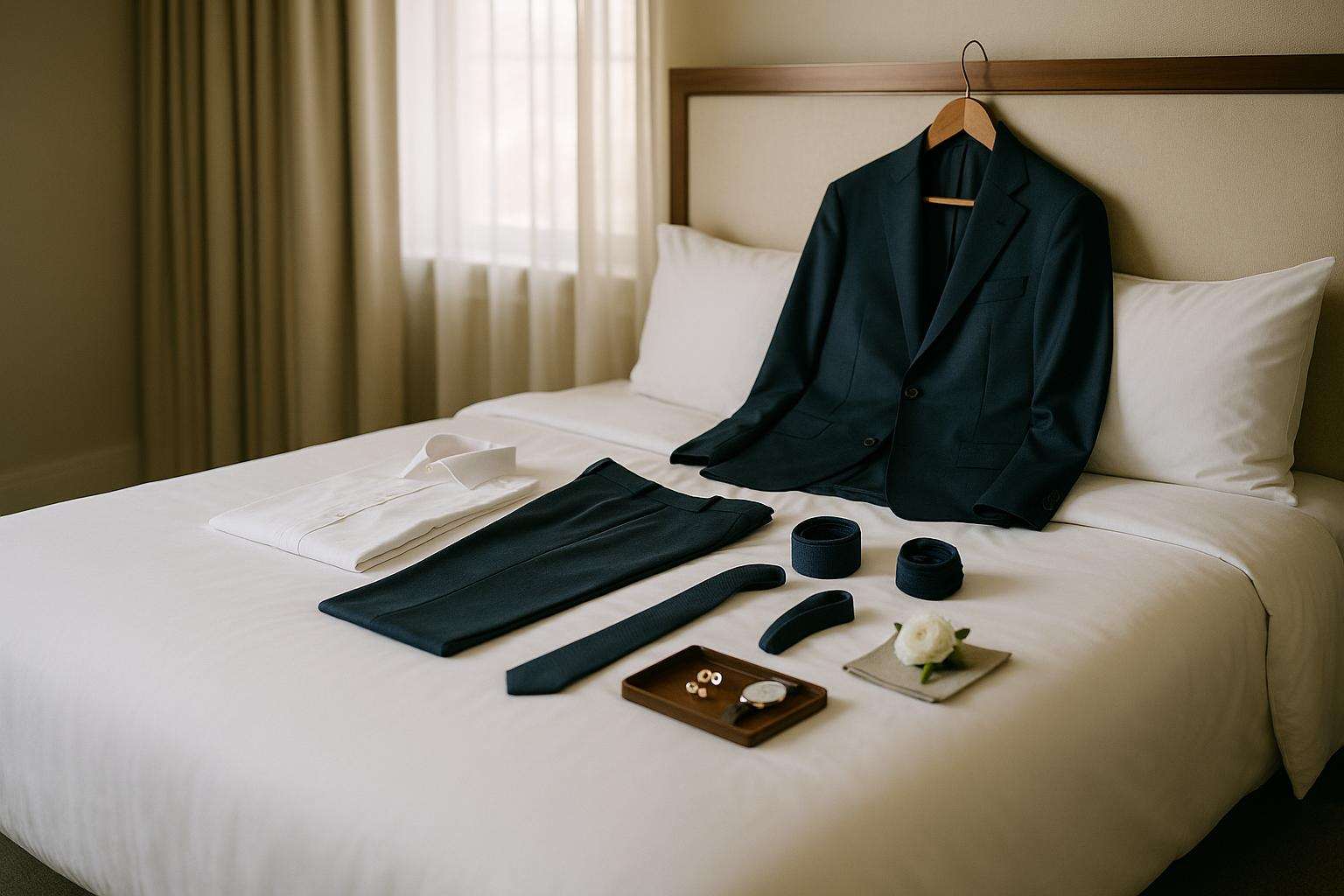
The groom's getting-ready runway is short, but every move counts. Dress him in order — foundation, shirt, trousers, neckwear, jacket, then the boutonniere last, pinned 30 to 60 minutes before the ceremony on the left lapel. Pack a small emergency kit (stain pen, lint roller, sewing kit, backup shirt), and manage heat from both sides: a clinical antiperspirant the night before, and a breathable cloth like fresco or tropical wool. Done well, he stays crisp from the first look to the last dance.
You have spent months on your own getting-ready timeline, and somewhere in the planning you realized the same question hangs over him: when does he dress, in what order, and how does he stay looking that sharp for twelve hours? The reassuring truth is that the groom needs a fraction of the runway you do. What he needs instead is a sequence — a short, well-ordered set of moves — so that the few things he does are done calmly, in good light, and in time. This is the day-of logistics of his attire: not the long-lead planning, not the leisurely morning, but the choreography of dressing him and keeping him crisp.
When should the groom start getting dressed?
While your transformation can run several hours, his is comparatively quick. Most grooms relax through the morning — breakfast, a little movement to settle the nerves, then a shower and shave — and begin dressing about an hour to ninety minutes before the ceremony, or roughly an hour before a first look. The marker most photographers rely on, per WeddingWire's wedding-day timeline, is to have him in his undershirt and trousers about ten to fifteen minutes before they arrive, with everything else laid out and within arm's reach: tie, cufflinks, watch, socks, shoes, boutonniere, pocket square, a touch of cologne.
That small buffer is the whole game. It turns the tie-tying, the jacket, and the boutonniere into unhurried moments — the very ones a photographer wants to capture, often with his father helping the tie and his mother or best man pinning the flower — rather than a frantic last five minutes before the car arrives.
What is the correct order to put everything on?
Dressing in the right sequence keeps the shirt crisp and avoids the untuck-and-redo shuffle. The reliable order runs like this:
| Step | What he puts on | Why this order |
|---|---|---|
| 1 | Shower, shave, hair, antiperspirant | Skin and grooming first, before any cloth touches him |
| 2 | Socks, underwear, undershirt | The foundation layer; undershirt absorbs sweat off the dress shirt |
| 3 | Trousers, then shoes | Shoes before the shirt-tuck avoids untucking to bend down |
| 4 | Dress shirt, cufflinks, neckwear | Cuffs and collar set before the tie or bow tie is knotted |
| 5 | Belt or suspenders, watch | The finishing hardware, before the jacket goes on |
| 6 | Jacket, then pocket square | Square folded and seated once the jacket is on |
| 7 | Boutonniere — last | Pinned by a parent, best man, or florist, close to ceremony time |
Following this top-to-bottom, foundation-to-flower order means nothing has to be undone, and it leaves natural openings for the people who love him to help — the small, photographed gestures that make the getting-ready gallery feel like more than a fashion shoot.
When does the boutonniere go on, and on which lapel?
This is the one piece of timing grooms most often get wrong, so it is worth being firm. The boutonniere goes on last, and as close to the ceremony as practical — usually 30 to 60 minutes before. Fresh flowers hold for only about four to six hours out of water, so if your photography begins well ahead of the ceremony, ask the florist about a floral sealant or a hardier bloom. Have the boutonnieres and bouquets delivered at least thirty minutes before the photographer arrives so nothing is waiting on a doorstep.
It sits on the left lapel, threaded through the buttonhole with the stem angled down toward the pocket — over the heart, where men's lapel buttonholes are cut. Pinning is a two-person job done from behind the lapel, and it photographs beautifully when the best man or a parent does it. For placement and styling detail, Poppy Flowers' boutonniere guide is a clear, traditional reference.
What belongs in the groom's emergency kit?
A small, well-chosen kit — carried by a groomsman, never crammed into his pockets — handles nearly everything that goes sideways. The Knot and TieMart both build their lists around the same workhorses:
- A stain pen — makeup transfer from the couple's photos and congratulatory hugs is the single most common mishap.
- A lint roller — non-negotiable on a dark suit or tuxedo.
- A sewing kit with double-sided or hem tape — for a popped button, a fallen hem, or a wandering collar point.
- A backup dress shirt — in heat, the first one can be sweated through before the reception.
- Breath mints, deodorant, a comb, pain reliever, antacids — the small comforts that keep nerves from showing.
- Outdoor add-ons — sunscreen, wet wipes, and a discreet handkerchief to dab (never rub) at sweat.
How does the groom stay cool and crisp through the reception?
Staying sharp from ceremony to send-off is a two-lever problem: the body and the cloth. On the body, have him apply a clinical antiperspirant the night before to clean, dry skin, then again in the morning — the active ingredients need that overnight contact to actually work. Disposable underarm pads or a sweat-proof undershirt add insurance in humidity; Carpe's sweat-protection guidance covers both. Keep him hydrated, protect a few calm moments before the ceremony since nerves trigger sweat, and have him reapply deodorant between the ceremony and the reception.
The other half is fabric, chosen to the season. A heavy or synthetic cloth will defeat the best antiperspirant. For a warm-weather wedding, The Black Tux's fabric guide points to fresco or high-twist wool — an open weave you can hold up to the light — and tropical lightweight wool around 240 to 290 grams, both of which stay polished while venting heat. Linen and wool-silk-linen blends breathe even more freely, with the blend tempering linen's tendency to wrinkle. Seersucker and cotton suit casual and outdoor venues. He should steer clear of flannel, tweed, and polyester in the heat, and favor light grey, soft blue, or beige — lighter colors reflect the sun rather than absorbing it.
Before he walks out the door, run one last pass: wallet, phone, vows card, pocket square seated, boutonniere secure, and — above all — the rings safely in the best man's inside pocket. A swipe of the lint roller across the shoulders, a glance in a full-length mirror, one deep breath. He is ready, and he will still look it when the music slows at midnight.
Frequently asked
When should the groom start getting dressed on the wedding day?
He needs far less runway than you might fear. Most grooms relax through the morning and begin dressing about an hour to ninety minutes before the ceremony — or roughly an hour before a first look. The practical marker photographers use is to have him in his undershirt and trousers about 10 to 15 minutes before they arrive, with every remaining detail laid out and within reach. Building in that small buffer means the tie-tying and jacket moments are unhurried, well-lit, and photographed at ease rather than in a scramble.
When does the boutonniere get pinned, and on which lapel?
Pin it last, and as close to the ceremony as is practical — typically 30 to 60 minutes before — because fresh blooms only hold for roughly four to six hours out of water. It sits on the left lapel, threaded through the buttonhole with the stem pointing down toward the pocket, over the heart. According to Poppy Flowers' etiquette guide, having the best man, a parent, or the florist pin it both steadies the placement and makes a lovely getting-ready photograph.
What should go in the groom's emergency kit?
A compact kit covers nearly everything that goes wrong. The essentials, per The Knot: a stain pen for makeup transfer and hug smudges, a lint roller for dark suits, a small sewing kit with double-sided or hem tape, a backup dress shirt, deodorant, breath mints, a comb, pain reliever, and antacids. Add sunscreen and wet wipes for outdoor venues. Keep it in a small bag a groomsman carries — never stuffed into his jacket pockets, which bulks the silhouette in photographs.
How can the groom avoid sweating through his suit?
Work both the body and the cloth. Have him apply a clinical antiperspirant the night before to clean, dry skin and again in the morning, since the active ingredients need overnight contact. Pack disposable underarm pads or a sweat-proof undershirt; brands like Carpe make both. Keep him hydrated, give him calm moments before the ceremony, and reapply deodorant between the ceremony and reception. The rest is fabric: a breathable cloth does half the work of staying dry.
What is the best suit fabric for a hot-weather wedding?
Choose an open, breathable weave and a lighter color. The most cooling options, per The Black Tux, are fresco or high-twist wool (an open weave you can hold to the light), tropical lightweight wool around 240 to 290 grams, and linen or wool-silk-linen blends. Seersucker and cotton suit casual or outdoor venues. He should avoid flannel, tweed, and polyester in heat, and lean toward light grey, soft blue, or beige, which reflect rather than absorb the sun.
What are the last things to check before he leaves for the ceremony?
Run a quick final pass. Confirm his wallet, phone, and vows card are on him, that the boutonniere is pinned and secure, and that the pocket square is set. Most important, make sure the best man has the rings safely stowed in an inside jacket pocket, not loose. A lint-roller swipe over the shoulders, a glance in a full-length mirror, one deep breath — and he is ready. As WeddingWire notes, this last calm moment is worth protecting on the timeline.