The Groom's Role
Groom and Groomsmen Getting-Ready Morning: A Calm, Photo-Ready Plan
An hour-by-hour plan for his getting-ready morning with the groomsmen — timing, food and drink, grooming touch-ups, the dressing order, and styling the room so the photographs look effortless.
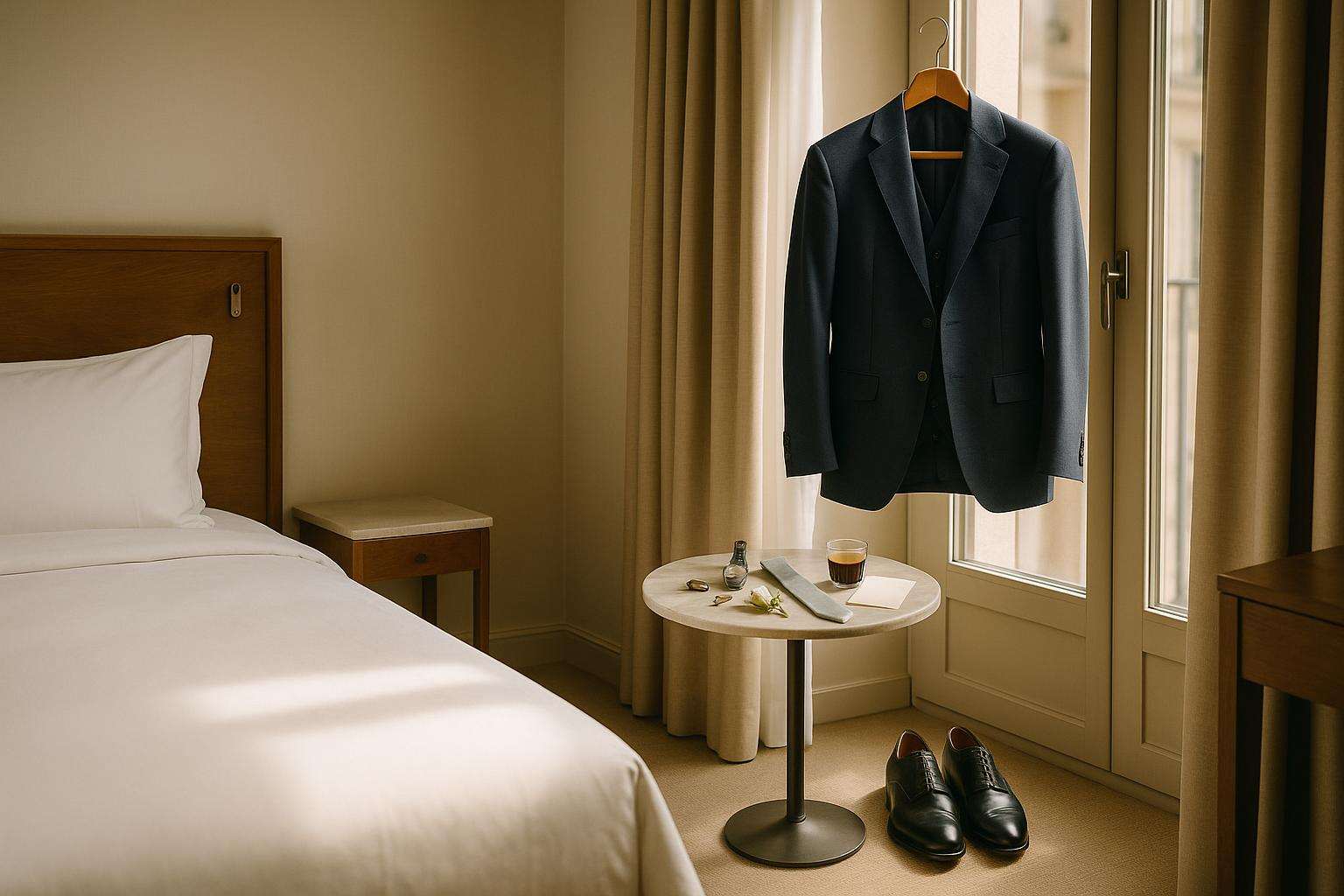
Treat his wedding morning as a calm, bounded block of two to three hours, not an open-ended hang. The reliable rule from photographers and planners: have him fully dressed about an hour before the ceremony, and reserve roughly 45 minutes for getting-ready photos. Movement and a real breakfast first, grooming touch-ups (never a haircut) second, dress in order third, photos fourth, depart on time fifth. Keep the drinks light until after the ceremony.
You have probably already discovered that the groom's morning gets treated as an afterthought — a few friends, a few drinks, and a scramble into a suit. It does not have to be that way, and it photographs far better when it is not. The morning he gets ready is the quiet, joyful overture to the whole day, and a little structure is what lets him actually enjoy it rather than manage it. What follows is the hour-by-hour plan you can hand to his best man so the morning runs itself.
How long does the groom actually need on the wedding morning?
More time than most men assume, and in a clearer shape. Wedding photographers converge on a simple benchmark: the groom should be fully dressed at least one hour before the ceremony start time, not counting travel. That hour is the buffer that turns a rushed morning into a relaxed one, leaving room for final adjustments, family arrivals, and pre-ceremony photographs. Photographers typically ask for around 45 minutes of getting-ready coverage so candid moments, the detail shots, and the group photos never feel hurried, as WeddingWire's groomsman timeline lays out.
Working backward from the ceremony is the easiest way to build his schedule. Here is a worked example for a ceremony at 4:00 PM:
| Time | What happens |
|---|---|
| 9:00–11:00 AM | Movement and breakfast — a walk, a gym session, a round of golf, or simply a sit-down meal with family and groomsmen to burn nervous energy. |
| 11:00 AM–12:00 PM | Shower, careful shave, and grooming touch-ups. Some grooms book a barbershop for hot-towel shaves together. |
| 12:00–1:30 PM | Dress in order; the best man confirms he has the rings. |
| 2:00–2:45 PM | Getting-ready photos with the groomsmen. |
| 3:00 PM | Depart for the venue — one hour before the ceremony. |
The exact clock times shift with travel and the first-look plan, but the proportions hold: a relaxed front half of the morning, a focused dressing window, then photos, then a calm departure with margin to spare.
What should the groom do about grooming the morning of?
The single most useful thing to tell him is this: the morning is for touch-ups, not transformations. The haircut should already be done. Barbers and grooming editors are unanimous that the cut belongs one to two weeks before the wedding so it has time to settle into something that looks like him at his best — never the day before, and certainly not the morning of. On the day itself, a short, sensible routine does all the work:
- Cleanse and moisturize. A gentle face wash — something like Kiehl's Ultra Facial Cleanser — followed by a daytime moisturizer keeps skin calm and even under a camera.
- Shave early and with care. A clean wet shave with a good razor (Harry's is a reliable, well-reviewed choice) and a cushioning gel, done with time to spare, keeps any redness from showing in close-ups. Razor burn the morning of is the most common and most avoidable grooming mistake.
- Control shine. Warm rooms and camera flash exaggerate oil. A mattifying moisturizer with SPF — such as Jack Black's Double-Duty Face Moisturizer — keeps his forehead from catching the light.
- Style, lightly. A pliable pomade or clay — Baxter of California makes long-trusted versions — holds hair in place without looking wet or stiff.
- Scent, sparingly. A few sprays only. Over-application reads as nerves and lingers in the photos and the getaway car.
If he wants a little ceremony around it, booking the barbershop for the group — hot towels, a proper shave, a coffee — turns grooming into one of the morning's nicest moments rather than a chore.
In what order should the groom get dressed?
A dependable order prevents the classic mishaps — a wrinkled shirt, a forgotten stud, a man bending double to lace shoes inside a buttoned jacket. Hand him this sequence:
- Undershirt and socks first.
- Trousers, then the dress shirt — buttoned from the bottom, collar last.
- Belt or braces, then the watch.
- Tie or bow tie, then cufflinks and shirt studs.
- Shoes — laced and tied before the jacket goes on.
- Pocket square, then the jacket (top button only, and only when standing).
- The boutonniere last, pinned by a father, brother, or the best man.
That final step is worth protecting. The pinning of the boutonniere by someone who matters to him is one of the most-loved getting-ready photographs there is, and it only happens if the flower is set aside and not pinned on in a rush.
How do you style the room so the photos look effortless?
Great getting-ready photos are mostly preparation, and almost none of it is the groom's job once the morning starts — so set it up the night before. Choose a clean, well-lit room near a large window, and clear the clutter: hide cords, water bottles, and stray bags, which is the detail photographers ask for most. Gather the flat-lay details in one place — the rings, watch, cufflinks, tie, boutonniere, the invitation, his cologne, and the shoes — so the photographer can shoot them quickly. Hang the suit on a wooden hanger rather than plastic or wire, somewhere it can be photographed.
Then plan one real moment. Reading a letter from his partner, a quiet first look with a groomsman, opening a gift, or a single toast gives the photographer something genuine to capture instead of staged standing-around. On food and drink, keep it sane: a real breakfast, water within reach, and snacks on hand for the groomsmen. Save the celebrating for after the vows — photographers and planners alike flag heavy morning drinking as the fastest way to turn a calm morning chaotic. An espresso and one celebratory toast is the measured, photo-ready approach, and the one that gets him to the aisle looking unmistakably like himself on a very good day.
Frequently asked
What time should the groom start getting ready?
Work backward from the ceremony. The reliable benchmark is that the groom should be fully dressed at least one hour before the ceremony begins, not counting travel, with roughly 45 minutes reserved for getting-ready photos before that. For a 4:00 PM ceremony, that means dressing wraps by about 1:30 PM, photos run until around 2:45 PM, and he departs by 3:00 PM. Build the relaxed part of the morning — movement, breakfast, grooming — into the hours before noon, as WeddingWire's timeline suggests. Giving the morning a clear shape is what keeps it unhurried.
Should the groom get a haircut the morning of the wedding?
No. The haircut should happen one to two weeks before the wedding, never the morning of and ideally not the day before. A cut needs a few days to settle so it grows into something natural rather than looking sharp-edged and brand-new in every photograph. The morning is for touch-ups only — a careful shave, a clean face, light styling. If he wants the barbershop experience on the day, book it for a hot-towel shave and a tidy-up, not a fresh cut, so there are no surprises an hour before the ceremony.
What grooming products should the groom use on the wedding day?
Keep it to a short, proven routine. A gentle cleanser and a daytime moisturizer (Kiehl's makes well-regarded versions) keep skin even under a camera; a mattifying moisturizer with SPF such as Jack Black's Double-Duty controls shine in warm rooms and flash. Shave early with a quality razor like Harry's and a cushioning gel to avoid redness in close-ups. A pliable pomade or clay — Baxter of California is a longstanding choice — holds hair without looking wet, and a few sprays of fragrance is plenty. The wedding morning is not the time to try anything new on his skin.
In what order should the groom put on his suit?
Follow a sequence that avoids wrinkles and forgotten pieces: undershirt and socks first; then trousers and the dress shirt (buttoned from the bottom, collar last); belt or braces and the watch; tie or bow tie, then cufflinks and studs; shoes laced and tied before the jacket so he is not bending in a buttoned coat; pocket square; then the jacket. Pin the boutonniere last, ideally by his father, brother, or best man — it is both practical and one of the loveliest getting-ready photographs of the morning.
How can the groomsmen help the groom on the morning?
The most valuable thing they can do is keep the morning calm and take logistics off his plate. The best man should confirm he has the rings and the timeline; others can double-check that every groomsman's attire is complete — shirt, tie, shoes, socks, belt, cufflinks — and handle any vendor questions so the groom never has to. Beyond that, their job is good company: a real breakfast, an espresso, a single toast, and steady reassurance. Heavy drinking before the ceremony is the one thing to avoid; a relaxed, present group is the best gift they can give him.
How do you get good getting-ready photos of the groom and groomsmen?
Prepare the room and the details in advance. Pick a clean, well-lit space near a window and clear the clutter — cords, bottles, bags — then gather the rings, watch, cufflinks, tie, boutonniere, invitation, cologne, and shoes in one spot for detail shots. Hang the suit on a wooden hanger where it can be photographed. Plan one genuine moment, such as reading a letter from his partner, a toast, or the boutonniere pinning, so the photographer captures real interaction rather than staged standing. Allowing the full 45 minutes the photographer asks for keeps it unrushed.