Groomsmen
Coordinating Groomsmen Attire: Matching vs. Complementary
How to dress his party cohesively without the dated uniform look — when to match, when to complement, and how the group rental programs actually coordinate it.
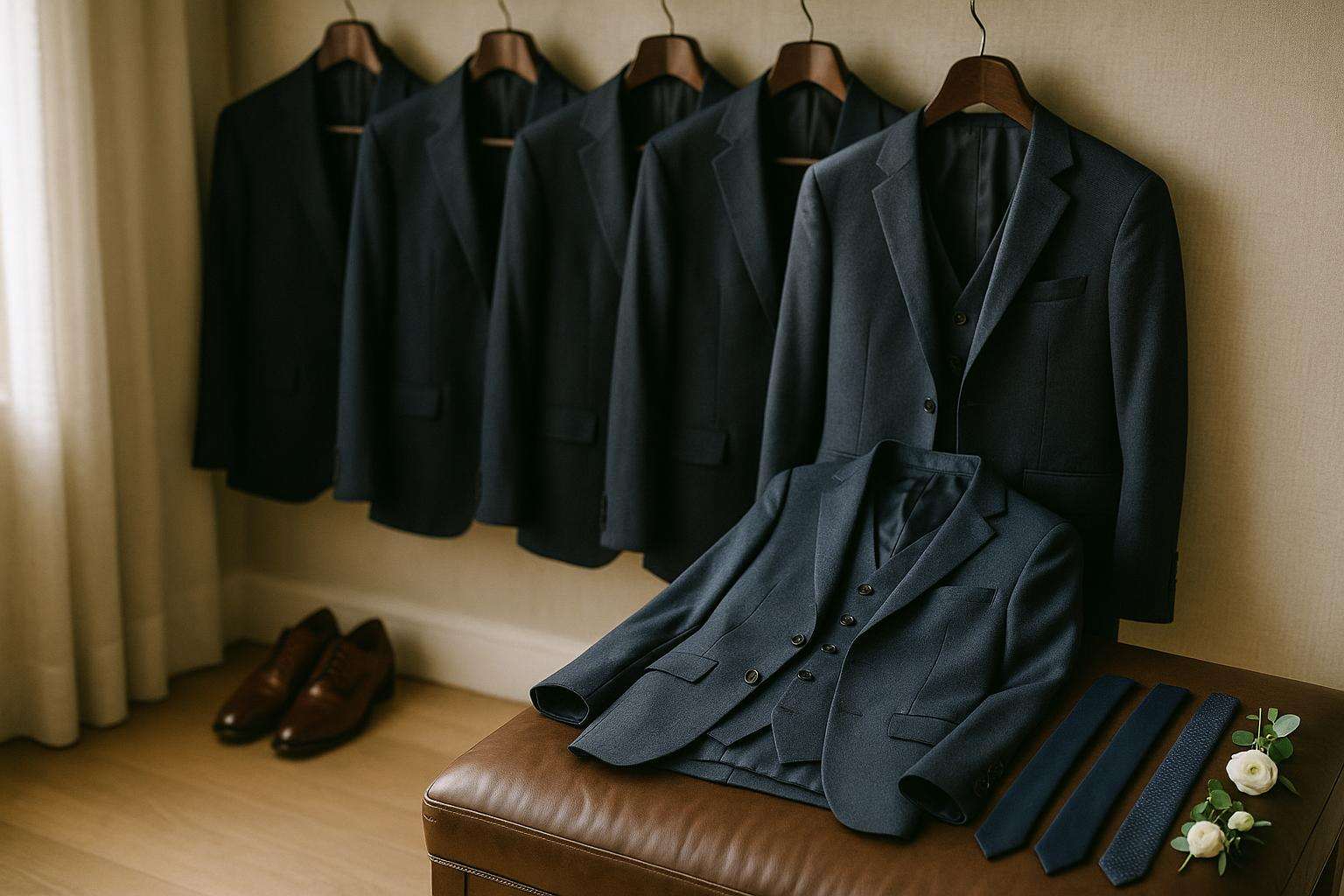
Whether his party matches or merely complements comes down to formality and venue — black-tie rewards a uniform look, while garden and beach settings invite coordinated variation. The modern default is coordinated, not identical: one unifying element (color family, fabric, or accessory) with small differences allowed. The groom earns one or two restrained tweaks — a peak lapel, a waistcoat, a patterned tie — and group rental programs from The Black Tux and Generation Tux handle the remote logistics, often with the groom's own outfit free or heavily discounted.
You have a colour in mind, a venue booked, and a group of men of rather different shapes and tastes to dress. The question that decides how the wedding party photographs is deceptively small: should they all wear the same thing, or simply belong to the same look? Coordinating groomsmen attire well is less about a rule and more about a degree — how far to let the men differ, and how clearly to set the groom a step apart. Done with restraint, it reads as effortless cohesion; done heavy-handedly, it reads as a uniform or, worse, fancy dress.
Should the groomsmen match the groom, or complement him?
Let the formality and the venue make the first call. A black-tie evening or a formal indoor ceremony still rewards a near-identical look — uniform black notch-lapel tuxedos read as deliberate, traditional, and entirely at home. As you move toward rustic barns, gardens, and beaches, a complementary approach earns its place: the same palette, the same fabric weight, but room for the men to differ in the small things. The old superstition that the groom and his men dressed alike to confuse evil spirits has given way to a gentler instinct — most couples now want a look that honours that sense of belonging without hiding the groom in the crowd.
The prevailing preference, almost everywhere, is coordinated rather than matching. As Generation Tux notes, the most natural wedding parties share one unifying element — a colour family, a fabric, or an accessory line — and allow the rest to vary. The reward is twofold: a single suit forced onto five different builds rarely flatters all of them, and a touch of individuality lets each man look like himself rather than a clone. The men should align with the bridesmaids; the groom's own look should primarily complement the bride.
How does the groom stand out without looking out of place?
Here the discipline is everything: one or two visible tweaks are plenty. More than that, and the contrast stops looking intentional. The moves that work, time and again, are quiet ones. A peak lapel on the groom's jacket against the party's notch lapels keeps the silhouette aligned yet elevated. A three-piece — an added waistcoat — distinguishes the groom while the men wear two-piece, and it photographs beautifully once the jackets come off for dancing. A patterned silk tie or a grosgrain bow tie among solids does the same work at the collar. A single step in colour — a midnight-blue dinner jacket against classic black — is about as far as you should push it.
The Black Tux's worked examples show how literal this can be. For a city-loft wedding, the men wear a charcoal two-piece with a slim black tie while the groom takes the same charcoal in a three-piece with a patterned tie. For a garden ceremony, the men wear a light-grey suit with a pastel tie and the groom wears the very same suit with a floral tie. The thread running through all of it: change one thing well, not five things loosely.
What colour and fabric rules keep the party cohesive?
Build from one unifying element and vary the rest. The simplest reliable method is to pick a palette of two or three coordinated tones and let the men choose within it — navy suits across the party, say, with ties in any shade of dusty blue, ivory, or gold drawn from the wedding's colours. Neutral base suits — charcoal, navy, grey — are the dependable foundation because they complement almost any bridal palette. For 2026, trend reporting points to warm earthy neutrals such as camel, sage, and terracotta, and to rich jewel tones like burgundy, forest green, and plum, with lighter tones for the warm seasons and deeper shades for autumn and winter.
Fabric discipline matters as much as colour. Keep the weave and weight consistent across the party so the suits photograph as a set rather than a near-miss; a matte wool beside a sheeny blend will betray the difference in every frame. And resist the urge to match the tie exactly to the pocket square — pieces in the same family that complement, rather than duplicate, read as the more refined choice. The aim throughout is harmony with the bridesmaids and, for the groom alone, a look that gently echoes the bride.
How do The Black Tux and Generation Tux group rentals work?
The practical magic of coordinating a party that may be scattered across the country is that you no longer need a fitting room. Both major online houses let the groom build a look, send a link, and have each man self-measure and order from anywhere — then coordinate colours and neckwear centrally. The economics, summarised below, also tend to reward the groom directly.
| Feature | The Black Tux | Generation Tux |
|---|---|---|
| Groom incentive | $200 off when 5+ members reserve qualifying outfits | Groom rents free with 5 paid rentals |
| Groomsmen incentive | 20% off the assigned outfit | Built into the group offer |
| Fabric swatches | Color matching supported | Free swatches shipped to compare shades |
| Online party management | Yes — link-based ordering | Yes — link-based ordering |
| Delivery | Ahead of the event | ~14 days before the event |
| Replacements / returns | Free fit replacements | Free replacements, pre-paid returns |
A few mechanics are worth holding in mind. The Black Tux's $200 groom saving applies when assigned outfits are valued at $200 or more, and a full outfit there is a nine-piece tuxedo or seven-piece suit. Generation Tux's free swatches are the quiet hero of colour coordination — they let you lay a real fabric against an actual bridesmaid swatch before anyone commits, which is the surest way to keep "complementary" from drifting into "mismatched." Whichever route you take, send the link early, set a firm order-by date, and let the platform carry the herding so the look stays unified and the day stays calm.
Frequently asked
Should the groomsmen match the groom or complement him?
Let the formality and the venue decide. Black-tie and formal indoor weddings still reward a near-identical look — uniform notch-lapel tuxedos read as deliberate and timeless. Rustic, garden, and beach settings invite a complementary, coordinated approach within a single palette. The modern preference almost everywhere is coordinated rather than matching: the men share one unifying element — color family, fabric, or accessory — while small details vary. That keeps the party cohesive in photographs without the slightly dated uniform effect, and it flatters a range of body types more gracefully than a single suit forced onto every man.
How does the groom stand out without looking out of place?
One or two visible tweaks are plenty — more and the look tips into costume. The most reliable moves are a peak lapel against the party's notch lapels, a three-piece (an added waistcoat) while the men wear two-piece, a patterned tie or grosgrain bow tie among solids, or a single step in color, such as a midnight-blue dinner jacket against classic black. According to The Black Tux, the goal is that he reads as the guest of honor at a glance while still belonging unmistakably to the group.
What colors work for the groomsmen in 2026?
Neutral base suits — charcoal, navy, and grey — remain the safest foundation because they complement nearly any bridal palette. For couples wanting more personality, SuitShop's 2026 trend report points to warm earthy neutrals such as camel, sage, and terracotta, and to rich jewel tones like burgundy, forest green, and plum. Lighter, warmer tones suit spring and summer; darker, richer shades suit fall and winter. Whichever direction you choose, the groomsmen's palette should align with the bridesmaids, while the groom's look primarily complements the bride.
How do The Black Tux and Generation Tux group rentals work?
Both let the groom build a look, send a link, and have each man self-measure and order from anywhere — no in-store visit. With The Black Tux, the groom saves $200 when five or more members reserve qualifying outfits, and groomsmen receive 20% off their assigned look. With Generation Tux, the groom rents free once five members pay, free fabric swatches ship so you can judge shades in person, and deliveries arrive about two weeks early with free replacements and pre-paid returns.
Should the groomsmen's ties exactly match the bridesmaids' dresses?
Coordinate rather than copy. An exact tie-to-dress or tie-to-pocket-square match tends to read as overly done and a little dated. The more refined approach is to stay within the same color family and let the pieces complement one another — for instance, navy suits across the party with ties in varied shades of dusty blue, ivory, or gold drawn from the wedding palette. Generation Tux's free swatches make this easy to test against a real bridesmaid swatch before anyone commits, so the tones read as intentional in photographs rather than mismatched.
How should the best man be styled differently from the groomsmen?
The best man traditionally carries one quiet distinguishing detail so he is easy to spot beside the groom — a slightly darker tie, a different boutonniere, or a pocket square in a related but distinct tone. Keep it subtle: the hierarchy of the day should read as groom first, best man second, groomsmen as a unified set. A simple, photogenic system is to assign the men on the bride's side one accent tone and those on the groom's side another, with the best man taking the deepest shade. That gives everyone a small piece of styling identity without fracturing the cohesive look.