Groomsmen
Groomsmen Duties: What's Actually Expected of Them
The honest, non-best-man responsibility set — what to ask of the men beside him, and what isn't their job to carry.
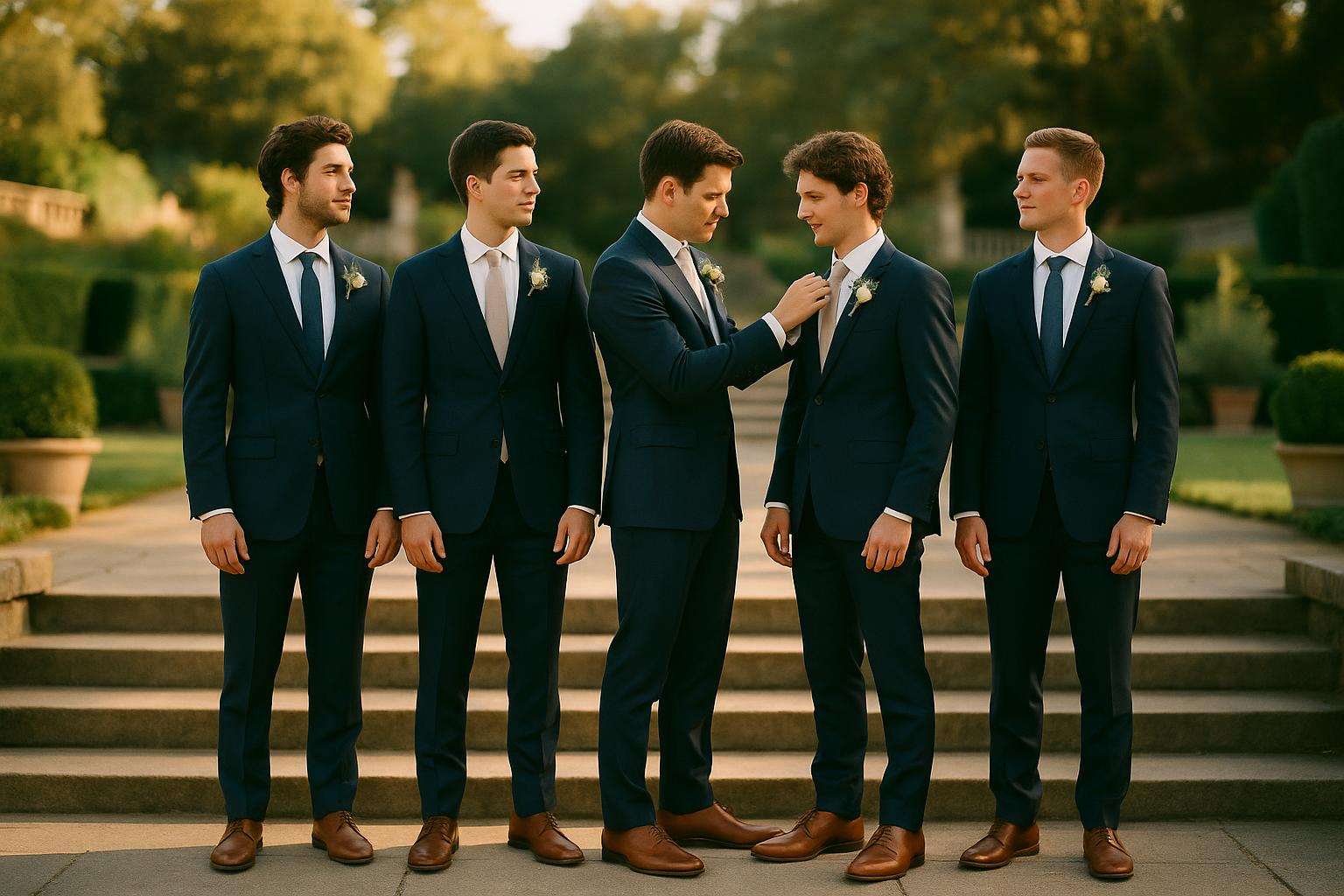
A groomsman's job is participation, not management. The honest expectation is small and clear: say yes promptly, get his attire sorted on time and pay for it, attend the rehearsal, usher and support on the day, and bring warmth to the room. The rings, the toast, and the bachelor-party logistics belong to the best man. Naming that line plainly is the most reassuring thing he can do for the men he's asked.
When you stand beside him at the planning, one quiet question tends to surface: what is he actually asking of his closest friends? The word groomsman can sound like a vague, heavy honor — a tuxedo, a speech, a long list of obligations. It is far simpler than that, and saying so out loud is a kindness to everyone involved. A groomsman is one of the groom's chosen attendants who stands at his side through the season and on the day. His duties are real but modest, and most of the weighty tasks people imagine belong to one specific man: the best man.
What are a groomsman's actual duties?
The honest list is short. A groomsman is expected to understand what's being asked of him, arrive on time to every wedding-related event, and attend the rehearsal and rehearsal dinner. He helps plan and pitches in financially for the bachelor party, gives the couple a gift — on his own or as part of a shared gift from all the attendants — and stays attentive and helpful toward guests throughout the day. He stands beside the groom at the altar and, very often, seats guests beforehand. The Emily Post Institute frames the role as active participation and support rather than leadership.
Just as useful is naming what is not his job. A standard groomsman does not hold the rings, deliver the reception toast, manage the other groomsmen, or own the bachelor-party planning. Those belong to the best man. The single most common groomsman anxiety — that he's quietly signed up for a speech he never agreed to give — dissolves the moment that boundary is stated. If he asks the men early, with the duties spelled out, he gives each one the gift of saying yes with open eyes.
How is a groomsman different from the best man?
The hierarchy is clean: groom, then best man, then groomsmen, then ushers. The best man is one of the groomsmen, but he is effectively the wedding party's foreman. He coordinates the other men, sees that everyone arrives on time and properly dressed, holds and guards the rings during the ceremony, often delivers prearranged vendor payments on the day, frequently witnesses the marriage license signing, plans the bachelor party, and gives the toast at the reception. The Knot lays out the full best-man brief in detail. A groomsman supports every one of those tasks without owning any of them.
| Responsibility | Groomsman | Best man |
|---|---|---|
| Attend fittings, get attire on time | Yes | Yes |
| Pay for his own attire | Yes | Yes |
| Attend rehearsal + rehearsal dinner | Yes | Yes |
| Usher / seat guests | Often | Sometimes |
| Help plan + fund the bachelor party | Pitches in | Owns + plans it |
| Hold the wedding rings | No | Yes |
| Deliver the reception toast | No | Yes |
| Coordinate the other groomsmen | No | Yes |
| Witness the license signing | No | Often |
Read the table top to bottom and the shape becomes obvious: the duties shared across both columns are the ones every man in the party owes — attire, punctuality, presence. The differences are all leadership. That's the whole distinction, and it's worth repeating to anyone who hesitates because they fear the bigger commitment.
What is a groomsman's job on the wedding day itself?
The most visible day-of duty is ushering. Where there's no separate usher team, the groomsmen seat the guests. The Emily Post guidance is practical: arrive 30 to 45 minutes early, know the seating order, hand out programs, and escort guests to their places — traditionally the bride's people on the left and the groom's on the right, though many couples now prefer an open "choose a seat, not a side" welcome. Reserve the front rows for immediate family, and seat any latecomers quietly at the back so the ceremony isn't disturbed. SuitShop offers a useful rule of thumb: about one usher per fifty guests.
Beyond the seating, his job is atmosphere. He helps the groom dress and stay calm, lightens the mood in the room, poses cheerfully for the photographs, mingles with guests and new family at the reception, and quietly assists the best man wherever an extra pair of hands is needed. None of it is heavy. All of it is felt.
Who pays for the groomsmen's suits, and what does it cost?
By long tradition, the groom chooses the attire but each groomsman pays for his own suit or rental. The friction comes from silence: many men simply don't know this going in. So the most gracious move is to state the brand, the cost, and the timeline up front — ideally in one clear group message — long before anyone is standing in a fitting room. As Zola notes, there are kind exceptions to the rule: a groom may quietly cover a financially strapped friend, or pick up pricey accessories like ties and cufflinks as a thank-you.
The numbers help set expectations. Most tuxedo rentals in 2026 land between $150 and $300, averaging around $205, with accessories and rush fees adding $50 to $150. Online services have made group coordination far easier: The Black Tux rents around $160 and ships roughly 14 days out, while Generation Tux starts near $129 and gives the groom a free rental once five paid rentals are booked. And the courtesy runs both ways — the groomsmen give the couple a gift, and the groom customarily thanks his men with a token of his own, often cufflinks, a travel kit, or an engraved flask. Asked early, told plainly, and thanked warmly, a groomsman has everything he needs to do the job beautifully.
Frequently asked
What are the basic duties of a groomsman?
A groomsman's job is straightforward: understand what's being asked of him, get his attire sorted on schedule and pay for it, attend the rehearsal and rehearsal dinner, and show up on time the day of. He helps plan and pitches in for the bachelor party, gives the couple a gift (alone or as part of a group gift), often ushers guests to their seats, stands beside the groom at the altar, and stays attentive and warm toward guests throughout. Emily Post sums it up as active participation and support — not management. The leadership tasks belong to the best man.
What's the difference between a groomsman and the best man?
The best man is one of the groomsmen, but he carries far more. He coordinates the other men, makes sure everyone is on time and properly dressed, holds and guards the rings during the ceremony, often delivers vendor payments on the day, frequently witnesses the marriage license signing, plans the bachelor party, and gives the reception toast. A groomsman supports all of that without owning any of it — no rings, no speech, no managing the group. The hierarchy runs groom, then best man, then groomsmen, then ushers, as The Knot describes it.
Do groomsmen pay for their own suits?
Traditionally, yes. The groom chooses the attire, but each groomsman pays for his own suit or rental. The catch is that many men don't know this going in, so the kindest thing a groom can do is state the brand, cost, and timeline up front — ideally in one group message. As Zola notes, there are graceful exceptions: a groom may quietly cover a financially strapped friend, or cover pricey accessories like ties and cufflinks as a thank-you. What he shouldn't do is choose an expensive look and stay silent about who's paying.
How much does a groomsman's suit or tux rental cost in 2026?
Most tuxedo rentals in 2026 fall between $150 and $300, averaging around $205, with accessories, timing, and rush fees adding another $50 to $150. Online services have made it easier to coordinate: The Black Tux rents around $160 and ships about 14 days before the event, while Generation Tux starts near $129 and gives the groom a free rental once five paid rentals are booked. Group discounts and early booking are the easiest ways to keep each man's bill down.
Are groomsmen the same as ushers?
Not quite — though they often overlap. An usher's role is guest-facing: greeting people, handing out programs, and seating them, while a groomsman is an attendant who stands beside the groom at the altar. At many weddings the groomsmen simply double as ushers, arriving 30 to 45 minutes early to seat guests before taking their places. SuitShop suggests roughly one usher per fifty guests. Formal escorting has softened in recent years toward a friendly "choose a seat, not a side" greeting, but the warmth of the welcome still matters.
When should the groom ask his groomsmen?
Attendants are typically chosen around six or more months before the wedding, which gives everyone time to book attire, request time off, and plan the bachelor party without a scramble. Asking early is also a courtesy: it signals that you value the role and respect each man's schedule and budget. When the ask comes with the practical details — the date, the rough cost, what's expected — the men can say yes with their eyes open. That clarity is what turns a flattering invitation into a duty they can genuinely deliver on.