Groomsmen
Groomsmen Suits: How to Choose & Coordinate Them
How to dress his men so the wedding party reads as one line in the photographs — color and fabric, fit, buy versus rent, and the group-ordering offers worth knowing in 2026.
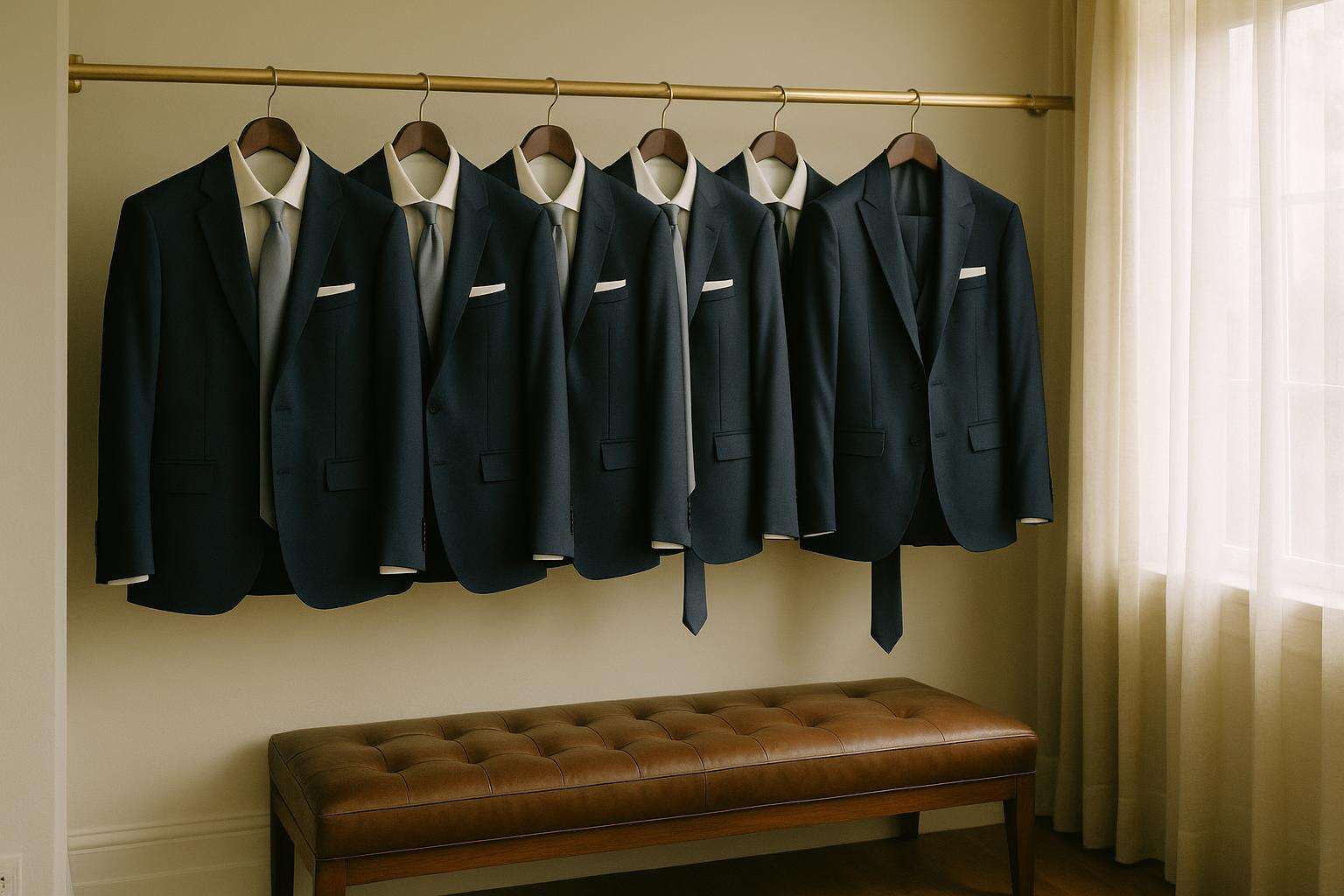
The groomsmen's suits exist to do one quiet job: make the groom unmistakable. Choose a single neutral color and fabric for the party, coordinate it to the season and the wedding palette, and let the groom set himself apart with just one or two deliberate touches. Then prioritize fit over everything — and use a group-ordering portal to get the whole party measured, dressed, and (often) the groom dressed free.
There is a moment in nearly every wedding photograph when the eye does a quick, unconscious sort: the men in a row, and then the one man who is clearly getting married. Good groomsmen attire engineers that moment on purpose. The party should read as a single, cohesive line — and the groom should stand a half-step apart from it, by design rather than by accident. Everything below serves that one idea.
How should groomsmen suits be coordinated with the groom?
The governing principle is cohesion without uniformity. Groomsmen attire should complement the groom's look — typically the same, or a touch more understated — so no one outshines him while the group still reads as one. The practical order of operations matters: choose the groom's attire first, then build the groomsmen around it, rather than the reverse.
From there, the groom distinguishes himself with one or two visible tweaks and no more, because a third or fourth difference starts to pull him out of the group entirely. The most dependable moves, drawn from The Black Tux's 2026 guidance, are a subtle shade shift — midnight blue for the groom against navy or black groomsmen, which adds depth in the photographs while keeping him the focal point — a peaked lapel where the party wears notch, a patterned tie against the group's solids, or a three-piece look for the groom alone (which pays off in the jacket-off, dance-floor shots). The father of the groom often matches the groomsmen, and the boutonniere can differ in size or accent while staying in the same flower family.
What color and fabric should groomsmen suits be?
Start with a neutral. Navy, gray, and black complement virtually any bridal palette and behave well under every kind of light, which is why they remain the default for a reason. From that base, coordinate the suit to the wider wedding colors and choose fabric for the season.
| Season | Suit color cues | Fabric notes |
|---|---|---|
| Spring | Soft pastels, light gray, tan | Lighter-weight wool, cotton blends |
| Summer | Vibrant or lighter tones, tan, blue | Linen, breathable open weaves |
| Fall | Burgundy, forest green, charcoal | Tweed and textured wool |
| Winter | Navy, emerald, classic black | Heavier wool, flannel |
One formality rule overrides all of the above: do not mix tuxedos with two- or three-piece suits across the party. The formality mismatch is the single most common way a coordinated group goes wrong. Let the wedding palette appear in the ties, pocket squares, socks, and boutonnieres — the small, swappable pieces — rather than in the jackets, which should stay disciplined.
Should groomsmen rent or buy their suits?
For most parties, renting is the economical choice, because formalwear is a one-time expense for the men who will wear it once. Average ceremony-attire rentals run about $205, with quality wool tuxedo rentals typically falling between $150 and $300 — against $1,500 or more to buy a comparable piece at retail. Renting also dissolves the logistics of a party spread across the country: coordinated looks, shared deadlines, and flexible returns, with nothing to ship back on a purchase.
Buying earns its place when the suit will live a second life — repurposed into interview, work, or date-night wear — or when you find purchase prices near rental cost. Some brands now sell groomsmen tuxedos for $149–$199, roughly what renting elsewhere would cost. Buying also opens up more alteration than a rental, which allows only minor adjustments — though shoulder width can't be changed on either. The deciding factor in the photographs, however, is not fabric or even color: fit matters more. A well-tailored rental consistently looks sharper than an expensive suit that doesn't sit right on the body.
How does group ordering work, and where should the party order?
The modern rental houses are built around a group portal, which is what makes a scattered wedding party manageable. The groom sets up the wedding event online, assigns each man an outfit, and every groomsman then orders from his own invitation on his own timeline — unlocking the group discount as he goes.
A few real options worth knowing for 2026:
- The Black Tux — rentals roughly $149–$249; free home try-on, prepaid returns, and a free rush exchange if a piece doesn't fit. The Grooms Rent Free / $200-off benefit triggers automatically when five or more members each reserve an outfit valued at $200 or more.
- Generation Tux — tuxedos start around $139; free fabric swatches and a free home try-on, with the groom's rental free once the party reaches five paid rentals.
- Men's Wearhouse / David's Bridal Mens — rentals about $99–$229, with in-store fittings nationwide for parties who want a physical try-on rather than a mailed one.
- SuitSupply — a buy-only route for groomsmen who would rather own a well-cut suit, in off-the-rack or made-to-measure, than rent it.
Whichever you choose, order swatches early, confirm fit through a home or in-store try-on, and aim to have every suit in hand at least 14 days before the wedding. That buffer is what turns a small fit problem into a quiet exchange rather than a day-of scramble — and it leaves you free to spend the final fortnight thinking about everything other than what the men will wear.
Frequently asked
Should groomsmen all wear identical suits?
Not identical, but unified. The aim is cohesion without uniformity: every groomsman should read as part of one line in the photographs while still looking like himself. Choose a single suit color and fabric for the party, then allow small, equal touches of personality — a consistent tie, pocket square, or shoe. What you want to avoid is one man in a tuxedo and another in a two-piece suit, because the formality mismatch reads as a mistake rather than a choice. Match the formality and the color across the group, and let the groom — not the groomsmen — be the one who stands apart.
How does the groom stand out from his groomsmen?
With one or two deliberate tweaks, never more, or the look drifts from cohesion. The most reliable differentiators are a subtle shade shift — a midnight-blue suit for the groom against navy or black groomsmen, which adds depth in photographs while keeping him the focal point — a peaked lapel where the party wears notch lapels, a patterned tie against the group's solids, or a three-piece for the groom alone. According to The Black Tux, one to two visible tweaks are plenty. The boutonniere can also differ in size or accent while staying in the same flower family as the party.
What color should groomsmen suits be?
Navy, gray, and black are the universal neutrals — they complement virtually any bridal palette and photograph well in almost any setting. From there, coordinate with the wider wedding colors and the season: pastels suit spring, lighter and brighter tones suit summer, burgundy or forest green read beautifully in fall, and navy or emerald carry winter weddings. For rustic or outdoor venues, tweed and tan suits feel more at home. The safest path is to pick a neutral base for the suits and let the wedding palette show up in the ties, pocket squares, and boutonnieres rather than the jackets themselves.
Is it cheaper for groomsmen to rent or buy their suits?
Renting is usually cheaper for a one-time wear. Average ceremony-attire rentals run about $205, with quality wool tuxedo rentals typically between $150 and $300, against $1,500 or more to buy a comparable retail piece. Buying only pulls ahead on value if the suit will be worn again — to work, interviews, or other events — or if you find purchase prices near rental cost, as some brands now offer. For a party scattered across cities, renting also removes the logistics of fittings and returns. Whichever you choose, prioritize fit: a well-tailored rental beats an expensive suit that sits poorly.
How far in advance should groomsmen order their suits?
Finalize rentals two to three months before the wedding so you have the full range of styles and colors, and so there is time to order free swatches and confirm fit through a home try-on. The garments should arrive at least 14 days before the event, which leaves a buffer for any last-minute adjustment or, with most rental houses, a free rush exchange if something doesn't fit. Generation Tux recommends locking arrangements in early specifically to protect both selection and fit, since the most popular colors can sell out for peak wedding dates.
Do groomsmen get a discount, and is the groom's suit free?
Often, yes. The major rental houses build the group around a free or discounted groom. With Generation Tux, the groom's rental is free once the party has five paid rentals. The Black Tux offers a comparable Grooms Rent Free or $200-off benefit that triggers automatically when five or more members each reserve an outfit valued at $200 or more, with the discount applied on the event dashboard — no manual claiming. Each groomsman orders from his own invitation on his own timeline, so the savings hold even when the party is spread across several states.