Wedding Bands
Men's Diamond Wedding Bands: A Buyer's Guide
How to choose a diamond band for him — settings, stone size, the right metal, and what it should cost — so the diamonds read as quietly tailored, not flashy.
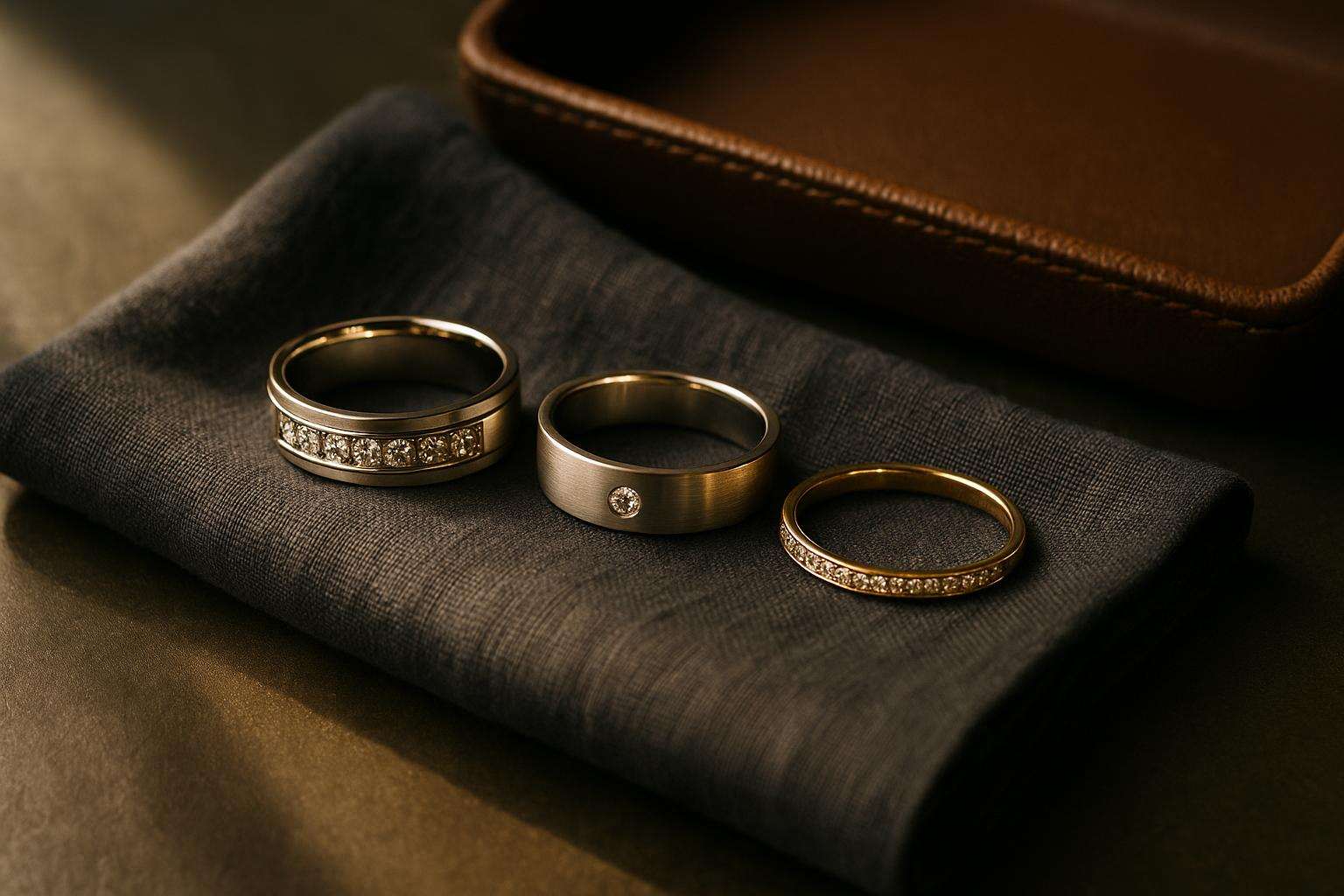
For a man's diamond band, the setting and the metal are one coupled decision. A channel or flush setting in gold or platinum gives secure, low-profile diamonds that survive daily wear; pavé adds sparkle for a dressier hand; and tungsten or titanium may look tough and cost little but can only carry inlaid stones and never resize. Keep the stones small and the result reads as quietly tailored, never flashy.
A diamond on a man's wedding band used to feel like a bold choice. It no longer does. Diamonds appear across mainstream men's collections today, and for good reason: at hardness 10 on the Mohs scale, the diamond is the hardest natural material there is, which makes it well suited to a ring worn through real, working days. The question is no longer whether he can have diamonds, but how much, how visible, and — the part most buyers overlook — set into which metal. This guide walks the partner planning his ring through every part of that decision.
Should a man's wedding band have diamonds at all?
Whether diamonds belong on his band is a matter of degree, not permission. A single stone set flush into the surface reads as understated and tailored, noticed mostly up close. A channel row of small diamonds adds a confident line of light with nothing raised or showy. A full eternity band of stones is openly decorative — a genuine statement. Major retailers now build their men's ranges around exactly this spectrum: Brilliant Earth, for instance, offers single-stone, diagonal-line, scattered "impression," half-eternity pavé, and full-eternity diamond styles in one collection. The right answer is the one that matches his hand, his work, and — if they want the two rings to echo — his partner's band.
What are the main diamond setting styles for a man's band?
Three settings dominate men's bands, and they are not interchangeable. Choosing among them is really choosing how protected, how visible, and how easy to maintain the diamonds will be.
Channel setting. The stones sit in a recessed track, sandwiched between two walls of metal with no prongs between them. The look is sleek and modern, the diamonds are well protected against snags, and you get a great deal of sparkle for the carat weight because each stone does not need its own setting. The trade-offs, as Diamonds.pro notes, are that channels gather grime in the crevices and can loosen stones if the ring is resized. This is the workhorse setting for a man who wants visible diamonds without any risk of catching.
Flush (or gypsy) setting. Each diamond is dropped into a hole drilled in the band so it sits level with the surface. It is the most protective, lowest-profile, and most rugged look — the natural pick for an active lifestyle or a man who wants the stone felt more than seen.
Pavé setting. Many tiny stones are held by microscopic metal beads, set so closely the surface looks paved with light. It maximizes sparkle but is the most decorative and the most maintenance-sensitive, so it suits dressier bands over working hands.
Which metal should actually hold the diamonds?
This is the decision most buyers get wrong, because they choose the metal for its toughness and only then ask about diamonds. In truth, the metal determines whether diamonds can be set securely at all.
Gold in 14K or 18K — white, yellow, or rose — is the most popular and the most setting-friendly option; its workability suits prong, channel, and pavé alike. 14K is more durable than 18K thanks to its higher alloy content, and all gold benefits from occasional polishing. Platinum is naturally white, hypoallergenic, and the long-term standard for holding stones: when it scratches it merely displaces metal rather than losing it, so the ring keeps its weight for life. It is the premium price tier. Tungsten, titanium, and cobalt are supremely durable and affordable, but here is the critical caveat from Brilliant Earth's metal comparison: tungsten's extreme hardness makes traditional stone-setting very difficult, so diamond versions almost always use pre-cut inlays or grooves rather than properly jeweler-set stones — and they cannot be resized. If diamonds matter, steer toward gold or platinum, and keep tungsten or titanium for a plain band or his second work ring.
How big should the diamonds be?
Restraint is the rule. Men's bands overwhelmingly use small accent stones, called melee, with the overall diamond weight — rather than one large stone — driving both price and presence. Settings commonly run from roughly 0.35 carat total weight up to about 3 carats on the boldest eternity designs. More or larger stones raise the cost; lab-grown diamonds cost meaningfully less than comparable natural stones while looking identical to the eye. For most grooms, a modest total weight of small rounds or baguettes in a channel reads as assured and masculine, not loud. If in doubt, choose smaller stones and a wider, more substantial band — the proportion does more for a man's hand than carat weight does.
What do men's diamond bands actually cost?
Price is driven by four things: stone size, stone count, natural versus lab-grown stones, and the metal. The table below anchors realistic tiers to what real retailers charge.
| Tier | Typical price | What you get | Example |
|---|---|---|---|
| Entry / alternative metal | ~$200–$700 | Inlay or grooved diamond accents in tungsten or titanium; not resizable | Just Mens Rings, Manly Bands |
| Mid (gold) | ~$1,400–$2,500 | 14K or 18K gold, single-stone, flush or modest channel | Brilliant Earth from ~$1,490 |
| Upper-mid (gold eternity / pavé) | ~$2,500–$3,900 | Half or full eternity, pavé, wider profiles | Brilliant Earth ~$3,190–$3,690 |
| Premium (platinum / fine diamonds) | ~$3,900–$8,500+ | Platinum settings, higher-grade stones, intricate work | Platinum custom bands |
Industry guidance from Just Mens Rings puts men's bands anywhere from just under $200 to over $8,500 for an intricate diamond piece, with platinum sitting at the top. The single biggest way to stretch a budget without dropping carat weight is to choose lab-grown diamonds.
Will the diamonds survive everyday wear?
With the right setting, comfortably so. Channel and flush settings protect stones far better than raised prongs, because nothing sticks up to catch or chip — which is precisely why they dominate men's bands. The diamond itself is the hardest natural material, so the real wear point is the metal: softer high-karat gold scratches and needs polishing, while platinum holds its surface best over decades. A channel band's only routine upkeep is cleaning grit from the crevices, plus a small risk of loosened stones if it is ever resized. For a man who works hard with his hands, many jewelers suggest a two-ring strategy: the diamond band for occasions, and a plain metal or silicone band for the job site and the gym. Choose the setting for his life, the metal for his skin and budget, and the stones for his temperament — and his diamond band will look as right on a fortieth anniversary as it did on the day.
Frequently asked
Is a diamond too flashy for a man's wedding band?
Not unless you choose it to be. The visibility of diamonds on a man's band is entirely a matter of setting and scale. A single stone set flush into the metal — sitting level with the surface — reads as quietly tailored and is often noticed only up close. A recessed channel row of small stones adds a confident line of light without anything raised or showy. It only becomes a statement when you opt for larger stones, multiple rows, or a full eternity band. Keeping the stones small, typically melee under about 0.05 carat each, almost always keeps a diamond band firmly in masculine, understated territory.
What is the difference between channel, flush, and pavé settings?
A channel setting seats a row of diamonds in a recessed track between two walls of metal, with no prongs between stones — sleek, protected, and the most popular choice for men. A flush (or gypsy) setting drops each diamond into a hole drilled in the band so it sits level with the surface; it is the lowest-profile and most rugged option, ideal for active hands. A pavé setting holds many tiny stones with microscopic metal beads so the surface looks paved with light — the most sparkling but also the most maintenance-sensitive. For most grooms, channel or flush is the sensible default, with pavé reserved for a dressier band. See Diamonds.pro's setting guide for detail.
Can you put diamonds in a tungsten or titanium ring?
Only in a limited way, and this is the single most important thing to understand before buying. Tungsten carbide is extremely hard, which makes it very difficult to work for traditional stone setting, so diamond versions almost always use pre-cut inlays or grooves rather than properly jeweler-set prong or flush stones. Titanium has similar limits. These metals also cannot be resized. If a securely set, repairable, long-lasting diamond matters to you, choose gold or platinum instead, and keep tungsten or titanium for a plain band or a second "work ring." According to Brilliant Earth's metal comparison, gold and platinum are the standard for holding diamonds well.
What metal is best for a man's diamond wedding band?
For a band that carries diamonds, 14K or 18K gold and platinum are the best choices because both are workable enough for secure settings and both can be resized. 14K gold is more durable than 18K thanks to its higher alloy content and is the practical everyday pick. Platinum is naturally white, hypoallergenic, and uniquely forgiving over decades — when it scratches it merely displaces metal rather than losing it, so the ring keeps its weight for life. It sits at the top of the price range. White gold offers a similar look for less but needs occasional re-plating. Match the metal to his skin, his budget, and, if they want the rings to echo, to his partner's band.
How much should a men's diamond wedding band cost?
Price is driven by stone size, stone count, whether the diamonds are natural or lab-grown, and the metal. Realistically, alternative-metal inlay bands start around $200–$700; mid-range gold single-stone or modest channel bands run roughly $1,400–$2,500 (Brilliant Earth's gold styles begin near $1,490); eternity and pavé designs land around $2,500–$3,900; and platinum or fine-diamond pieces reach $3,900 to $8,500 and beyond. The biggest lever for stretching a budget without sacrificing carat weight is choosing lab-grown diamonds, which cost meaningfully less than comparable natural stones.
Will the diamonds hold up to everyday wear?
With the right setting, yes. Channel and flush settings protect stones far better than raised prongs because nothing sticks up to snag or chip — which is exactly why they dominate men's bands. The diamond itself is the hardest natural material, so the real wear point is the metal: high-karat gold scratches and needs periodic polishing, while platinum holds up best over decades. A channel band's only routine upkeep is cleaning grit out of the crevices, plus a small risk of loosened stones if it is ever resized. For very physical work, many jewelers suggest a two-ring approach: the diamond band for occasions and a plain metal or silicone band for the job site and the gym.