Fit & Tailoring
How to Measure for a Suit at Home (Groom's Guide)
Eight numbers stand between him and a suit that looks made for him. Here is how to take each one at the kitchen table, the way the online and rental houses actually ask.
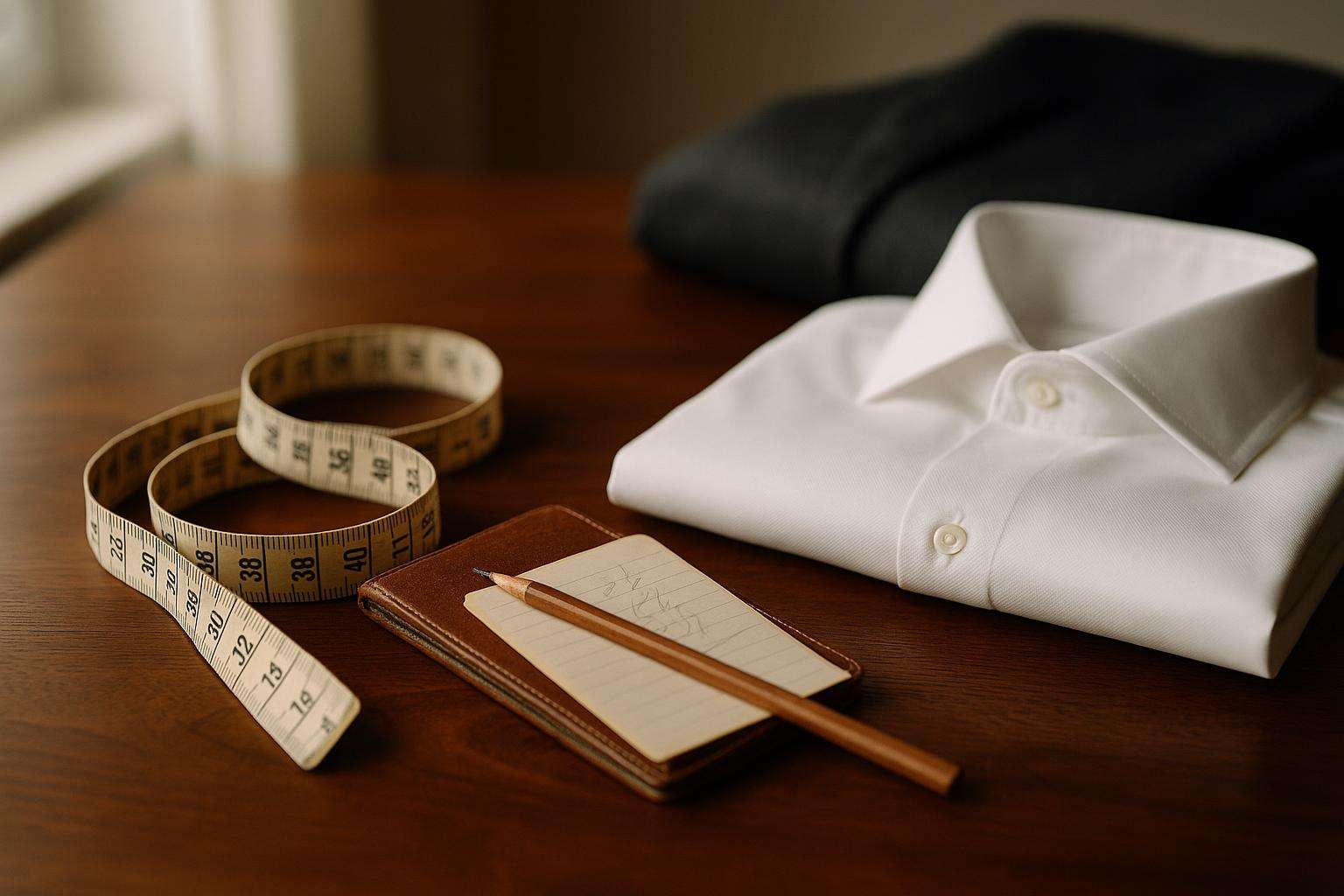
When he orders a wedding suit online or rents a tuxedo, the numbers you submit are the fit — there is no shop tailor to quietly correct a mistake. Use a flexible cloth tape, dress him in a fitted T-shirt, measure snug, not tight (one finger under the tape), take each line twice, and when he is between sizes, size up so a tailor has cloth to remove. Submit eight to twelve weeks out so there is room to alter before the day.
There was a time when a groom was measured in person, a tailor's tape moving over his shoulders while he stood still and trusted the result. Online made-to-measure and modern rental have moved that quiet ritual into your own home. It is faster and often kinder to the budget — but the accuracy now rests entirely on the person holding the tape, which on most evenings will be you. The good news is that the major houses have made the method clear and forgiving, and an hour at the kitchen table is all it takes to do it properly.
Why do at-home measurements matter so much for a wedding suit?
Because there is no safety net. When he walks into a shop, a fitter catches the inch you missed; when he submits a profile to Indochino or Hockerty, those numbers go straight to the cutting table. Indochino's self-measurement profile asks for roughly fifteen to twenty figures for a two-piece suit — close to what a bench tailor takes — and recommends a helper and a short video walk-through; it takes under ten minutes. Rental houses such as Generation Tux ask for a slightly shorter list, but their guidance is just as firm: a tuxedo has to sit cleanly from chest and waist to sleeve and leg, and his everyday clothing size will not get him there on its own.
The margins are small. Men's Wearhouse notes that a chest reading off by a single inch is the difference between a sharp modern jacket and a boxy one — and that the shoulder is the hardest line of all to alter once the jacket is sewn. That is precisely why it is worth slowing down for the half-hour it takes.
What do you need before you start, and how should he stand?
Very little, but the details matter. Gather a flexible cloth or tailor's tape — never a rigid carpenter's tape, which will not curve to the body — a full-length mirror, good light, and a pad to write each number down twice. Dress him in thin, form-fitting clothing: a fitted T-shirt and underwear. Bulky layers quietly add inches everywhere.
Have him stand relaxed and natural — shoulders down, arms at the sides — with no puffing of the chest and no pulling in of the stomach. Keep the tape snug, not tight: it should lie flat with about a half-inch of ease, roughly one finger underneath. Measure each area twice and, if the readings disagree, take a third and use the most consistent. One last quiet detail from Indochino's guidance: the waist and seat run about half an inch to an inch smaller in the morning than after dinner, so pick one time of day and keep to it.
How do you take each measurement, step by step?
Work top to bottom, writing as you go. Most online houses and rental sizers ask for some combination of these lines.
| Measurement | How to take it | What to watch for |
|---|---|---|
| Chest (sets jacket size) | Around the fullest part, high under the arms, tape level all the way round, arms relaxed; keep a half-inch of ease. | Jacket size is labeled by chest — a 42-inch chest is a 42; height sets the letter (R, L, S). |
| Shoulders | From the bony point of one shoulder to the other, tape following the curve of the upper back. | The hardest line to alter later — needs a helper; get it right first. |
| Sleeve length | From the shoulder point down a slightly bent arm to the wrist bone on the pinky side. | Should end at the wrist bone, showing about a half-inch of shirt cuff. Don't measure over thick clothing. |
| Jacket (back) length | From the base of the neck, below the collar, to about the knuckle of the thumb with arms relaxed. | Should just cover the seat. Don't start at the top of the collar. |
| Waist (sets trouser) | At the true waist near the navel — about four fingers below the belly button — tape level, one finger of ease. | Suit trousers sit higher than jeans; the jeans size is usually wrong. |
| Seat / hips | Around the widest point of the seat, tape level all the way round. | Don't tense; stand naturally. |
| Inseam | From the crotch seam down the inside of the leg to the ankle bone, measured with shoes on. | Most subtract about a half-inch for a classic break; the desired break changes the number. |
For a broad-shouldered groom, some rental sizers also take an overarm measurement — around the broadest part of the chest and shoulders together — and subtract seven to confirm jacket size; a 47-inch overarm points to a 40 jacket. And a useful reference number: the standard "drop" between jacket and trouser is six, so a 40 jacket commonly pairs with a 34 waist. A man who falls outside that drop is a candidate for ordering separates or planning a tailor visit from the start.
When should the groom measure, and what if he is between sizes?
Give yourselves a cushion. Online made-to-measure typically ships in two to four weeks, and nearly every suit — bought or rented — looks better after one final local alteration. Submitting his profile eight to twelve weeks before the wedding leaves room for shipping, a fitting, and a calm second pass if anything needs adjusting. The week-before scramble is how grooms end up in jackets that almost fit.
When he lands between two sizes, size up. A tailor can take a jacket or a waist in with ease, but letting a shoulder or chest out is, in practice, impossible. Hockerty and Indochino both let him save a profile and reorder, and Hockerty even offers a photo-based digital body profile if a tape feels daunting — but the manual method, with you as his helper, remains the most reliable way to get a wedding suit that looks unmistakably made for him.
Frequently asked
What measurements do I need to order a wedding suit online?
For a two-piece suit, most online made-to-measure houses ask for the same core set: chest, shoulders, sleeve length, jacket (back) length, waist, seat, and inseam, often with neck and stomach added. Indochino's self-measurement profile collects roughly fifteen to twenty numbers for a full suit — close to what a bench tailor takes — and it takes under ten minutes with a helper. Rental services like Generation Tux ask for a slightly shorter list because they fit you into stocked sizes rather than cutting cloth. Take every number the form requests; leaving the system to guess is exactly how a fit goes wrong.
How tight should the tape be when I measure him?
Snug, never tight. The rule shared across every house is to keep the tape flat against the body and slide one finger underneath it — about a half-inch of ease — so the cloth has room to move. Pulling the tape tight to get a flattering number produces a jacket that binds across the chest and a trouser he cannot sit in through dinner. Have him stand in a relaxed, natural posture in a fitted T-shirt; no puffing the chest, no sucking in the stomach. Measure each area twice, and if the two readings disagree, take a third and use the most consistent result.
Can he just use his jeans size for the suit trousers?
No, and this is the single most common error. Suit and tuxedo trousers are cut to sit at the natural waist, near the navel — higher than jeans, which usually ride on the hips. Measuring at the jeans line gives a number an inch or two too large and a waistband that sits in the wrong place. Find his true waist about four fingers below the belly button, keep the tape level, and do not let him suck in. Generation Tux also notes the standard "drop" — jacket chest minus trouser waist — is six, so a 40 jacket typically pairs with a 34 waist.
What if he falls between two sizes?
Size up. A tailor can take a jacket or trouser waist in far more easily than let it out, and the shoulder and chest of a finished jacket essentially cannot be enlarged. When a rental or off-the-rack size sits between two numbers, choose the larger and budget a short visit to a local tailor for the waist, sleeves, or hem. For made-to-measure, follow each brand's own between-sizes guidance, but the instinct is the same: leave yourself cloth to remove rather than cloth you wish you had.
How early should the groom take his measurements?
Earlier than feels necessary. Online made-to-measure typically ships in two to four weeks, and almost every suit — bought or rented — benefits from one final local alteration before the day. Submitting measurements eight to twelve weeks before the wedding leaves room for shipping, a fitting, and a calm second pass if something needs adjusting. Measuring the week before invites panic. If his body is still changing through a fitness plan, take the numbers as late as the timeline safely allows, then confirm with a tailor close to the date.
Does he really need a second person to measure him?
For the back, shoulders, and overarm, yes. A man cannot accurately run a tape across his own upper back or around his shoulders and chest together, and those are among the lines hardest to correct later. The partner planning the wedding is the natural helper here — and it is genuinely the easiest, lowest-stress way to get it right the first time. Use a flexible cloth tape, not a rigid carpenter's tape, work in good light by a mirror, and write each number down as you go rather than trusting memory.